
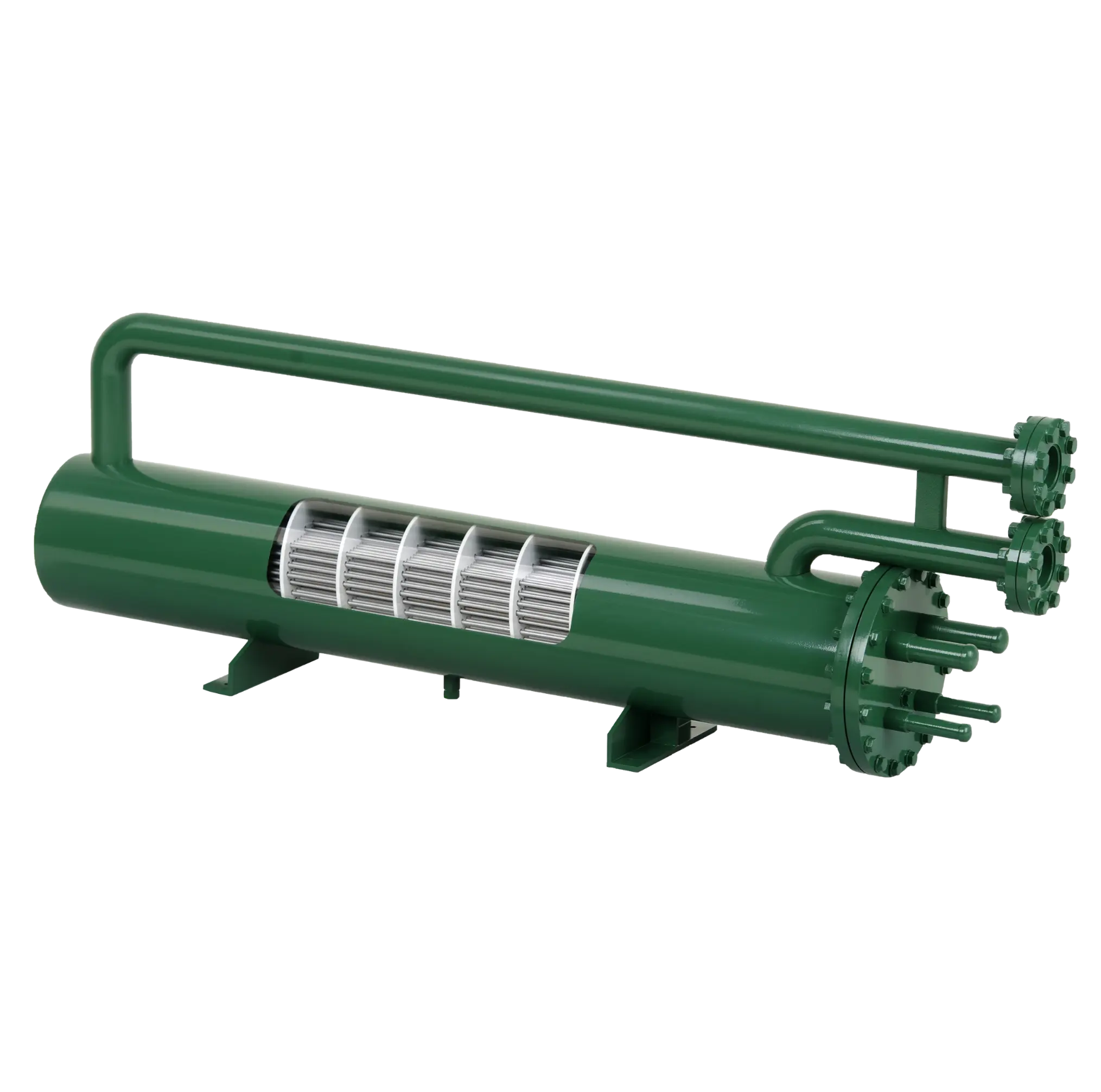
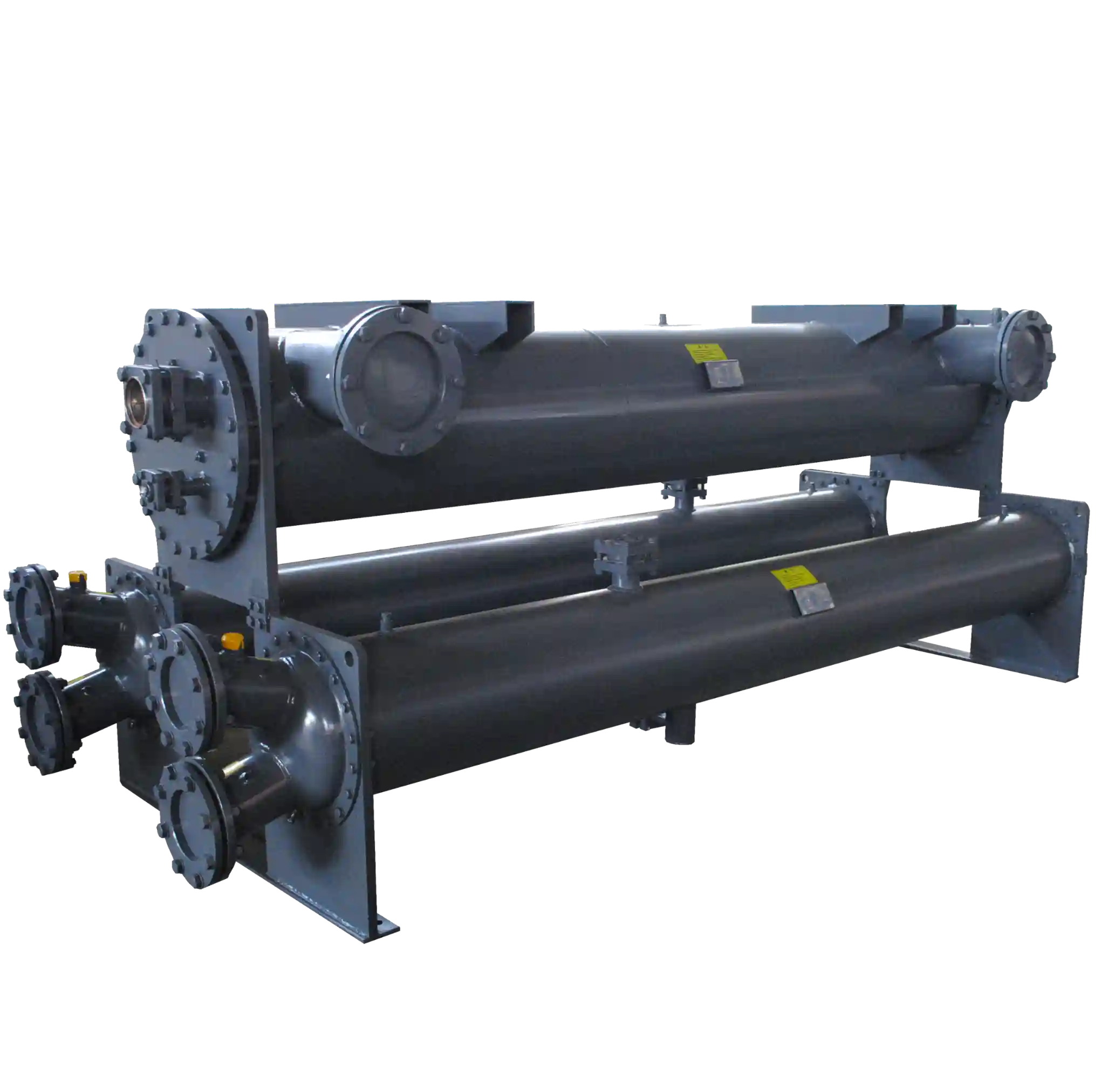
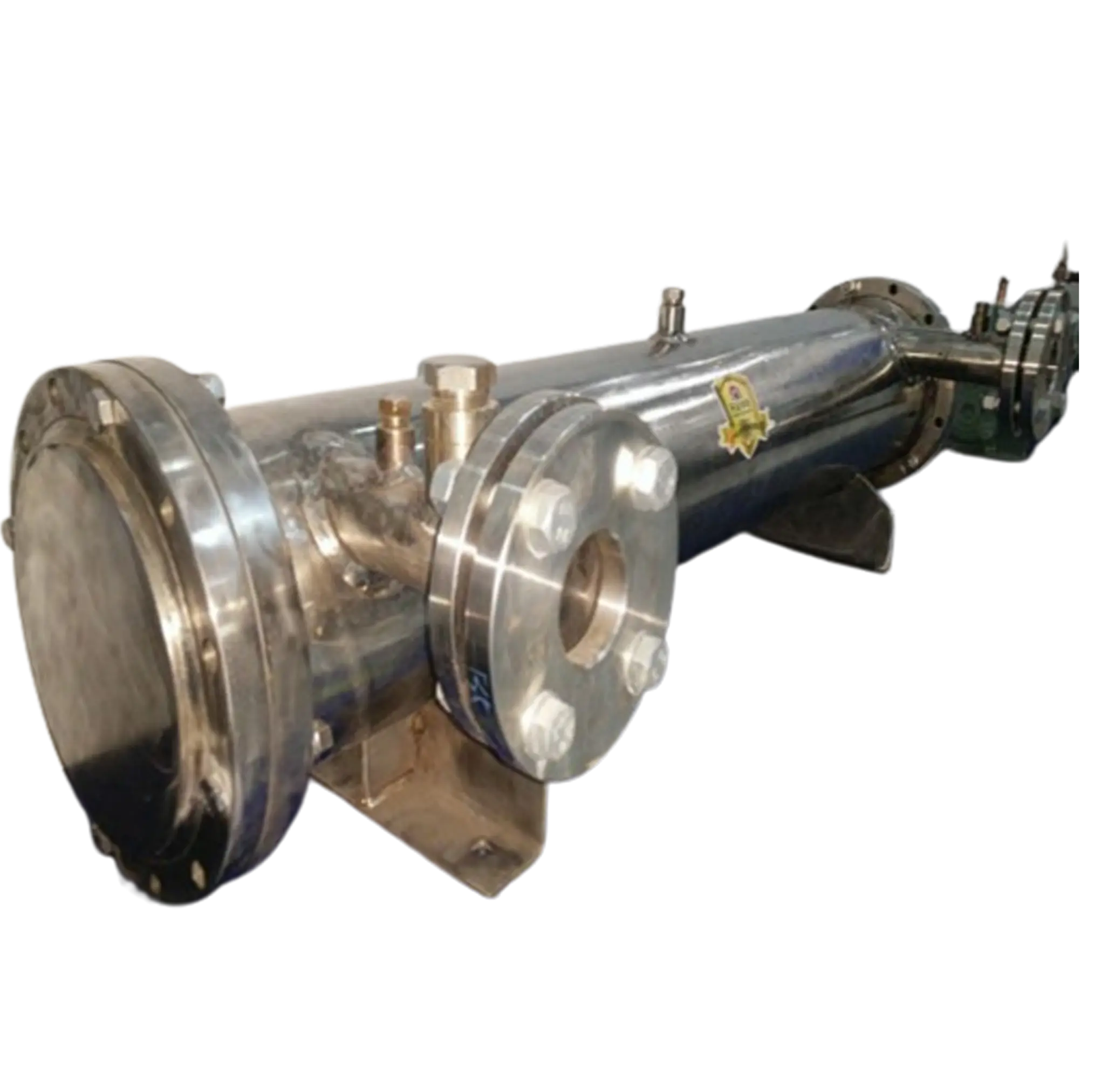
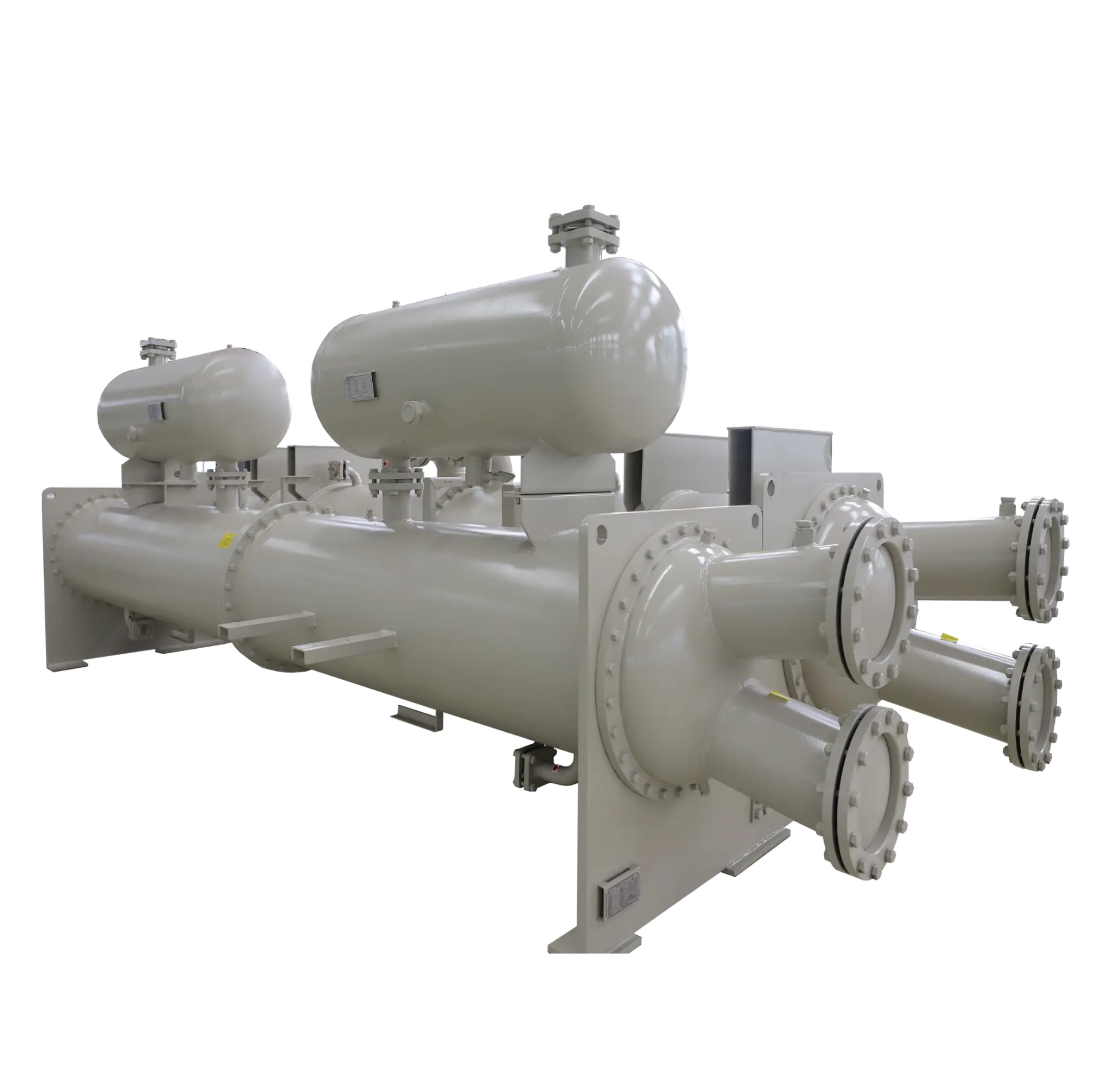
A 해수 응축기 해수 응축기는 해수를 냉각 매체로 사용하는 열교환기의 일종입니다. 이는 증기나 기타 고온의 공정 유체로부터 열을 제거하여 증기를 액체로 변환하고, 또는 공정 유체의 온도를 낮춥니다. 해안 및 해양 설비 근처에 해수가 쉽게 구할 수 있기 때문에 해양 추진, 연안 발전, 해상 시설 및 산업 냉각 시스템에서 널리 사용됩니다.
Engineering Failure Analysis와 International Journal of Heat and Fluid Flow에 발표된 연구는 해수 열교환기의 두 가지 중요한 설계 고려사항을 강조합니다: 내식성과 열전달 성능을 저하시킬 수 있는 오염물질 관리입니다.
해수 응축기란 무엇인가요?
해수 응축기는 뜨거운 증기나 공정 유체로부터 열에너지를 해수로 전달하도록 설계된 열교환기입니다. 일반적인 증기 응축기에서는 배기 증기가 열전달 표면의 한쪽 면을 흐르고, 해수가 다른 쪽 면을 순환합니다. 해수는 열을 흡수하면서도 보통 증기와 섞이지 않아 증기가 액체로 응축될 수 있으며, 이렇게 응축된 물은 회수되어 시스템 내에서 재사용됩니다. 정확한 구성은 적용 분야에 따라 다르지만, 대형 해양 및 연안 설비에서는 쉘 앤 튜브 방식이 일반적입니다. 이 방식은 상당한 냉각수 흐름을 처리할 수 있기 때문입니다.
해수 응축기의 목적은 단순히 뜨거운 유체를 냉각하는 것 이상입니다. 증기 동력 사이클에서 효과적인 응축은 터빈 출구의 낮은 배기 압력을 유지하는 데 도움을 줍니다. 이는 터빈 팽창을 이끄는 압력 차이를 지원하며 사이클의 전체 성능에 기여합니다. 해양 시스템에서는 응축기가 작동유체의 회수를 촉진하고 보조 장비의 안정적인 운영을 보장하기도 합니다. 다른 산업 공정에서는 해수 냉각 응축기가 냉동 시스템, 화학 처리 시스템 및 해상 유틸리티 시스템에서 과잉 열을 제거할 수 있습니다. 따라서 장비는 공정 용량, 작동 압력, 이용 가능한 해수 조건 및 신뢰성 요구사항에 따라 선택되어야 합니다.
해수 응축기를 일반적인 해수 열교환기와 구분하는 것이 중요합니다. 응축기는 특히 증기가 응축되는 공정을 다루며, 해수 열교환기는 두 액체 간에 상변화 없이 열을 전달합니다. 이러한 구분은 장비 크기 결정에 영향을 미치는데, 응축 과정에는 잠열 전달이 포함되며 설계 시 증기압, 응축수 배수, 비응축 가스 및 열전달 표면의 가용 온도차를 고려해야 하기 때문입니다.
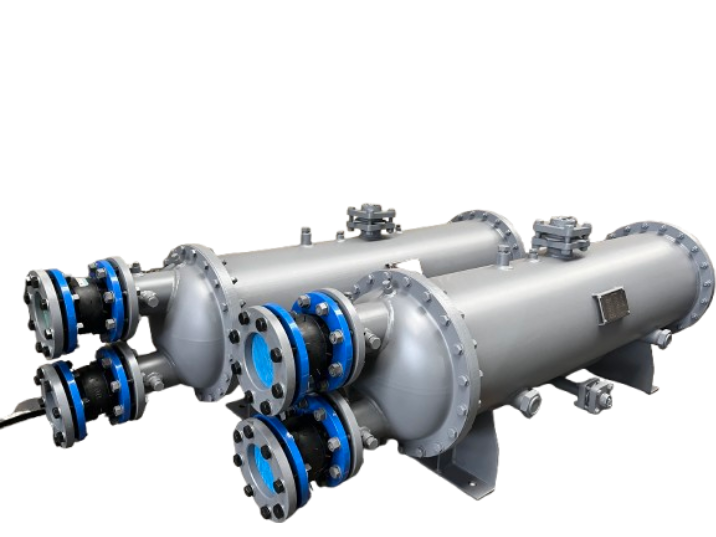
해수 응축기의 주요 목적은 무엇인가요?
해수 응축기의 주요 목적은 공정에서 원하지 않는 열을 제거하면서도 효율적이고 안정적인 운영에 필요한 조건을 유지하는 것입니다. 증기 시스템에서 응축기는 배기 증기의 잠열을 제거하고 증기를 액체 형태로 되돌려줍니다. 냉각 매체가 해수이므로, 이 시스템은 연안 발전소, 선박 및 해상 시설에서 같은 양의 담수 공급이 필요 없는 지속적인 열 제거를 제공할 수 있습니다.
잘 설계된 해수 응축기는 여러 연결된 기능을 수행합니다:
- 열 제거: 공정 유체의 열에너지를 해수로 전달하여 플랜트나 선박이 목표로 하는 작동 온도와 압력을 유지하도록 돕습니다.
- 응축수 회수: 증기 시스템에서는 응축된 물을 수집하여 급수나 작동유체 회로로 다시 돌려보내 전체 재고를 교체할 필요를 줄입니다.
- 열역학적 효율성 지원: 증기 터빈 사이클에서 적절히 낮은 응축기 압력을 유지하면 터빈을 통한 증기의 유용한 팽창을 증가시킬 수 있습니다. 실제 성능은 터빈 설계, 냉각수 온도, 응축기 청결도 및 기타 작동 조건에 따라 달라집니다.
- 운전 안정성: 냉각수 흐름, 필요 시 진공 상태 및 응축수 제거를 적절히 제어하면 성능 저하와 계획되지 않은 정지를 예방할 수 있습니다.
- 자원 실용성: 해수의 가용성으로 인해 적합한 연안 및 해양 지역에서는 일회용 또는 재순환 해수 냉각이 실용적일 수 있지만, 취수, 배수, 환경 및 유지보수 요건을 반드시 고려해야 합니다.
이러한 기능들은 서로 의존적입니다. 시운전 시 효과적으로 열을 전달하던 응축기가 튜브에 침전물이 쌓이거나 해수 흐름이 제한되거나 공기가 새어들어 비응축 가스 농도가 높아지면 효율성이 떨어질 수 있습니다. 따라서 응축기 선택 시 열전달 면적만이 아니라 전체 운전 시스템을 고려해야 합니다.
해수 응축기는 어떻게 작동하나요?
일반적인 해수 응축기는 간접 열교환 방식으로 작동합니다. 뜨거운 배기 증기가 응축기 쉘로 들어가서 더 차가운 해수를 흐르는 튜브의 외부 표면과 접촉합니다. 특수 설비에서는 배열이 반대로 되기도 합니다. 열은 튜브 벽을 통해 응축되는 증기에서 냉각수로 전달되며, 이 과정에서 증기가 잠열을 방출하고 액체 응축수로 변합니다. 따뜻해진 해수는 응축기 밖으로 나가 배출되거나 플랜트 구성에 따라 냉각 시스템의 다른 부분으로 보내집니다.
이 과정은 응축되는 증기와 해수 사이에 충분한 온도차를 유지하는 데 의존합니다. 증기 발전소에서는 응축기가 보통 진공 상태에서 작동하여 증기 터빈이 대기압보다 낮은 압력에서 배기되도록 합니다. 공기 및 기타 비응축 가스는 제거되어야 하며, 이들은 열전달 표면 근처에 쌓여 열전달 효율을 떨어뜨리고 응축기 내부 압력을 높일 수 있습니다. 응축수는 적절한 배수 시스템을 통해 수집되고 제거되며, 공기 제거 장비는 필요한 작동 조건을 유지하는 데 도움을 줍니다.
간단한 작동 순서는 다음과 같습니다:
- 해수 취수: 해수는 취수 시스템을 통해 바다에서 끌어오며, 보통 스크린이나 기타 보호 장비를 사용해 냉각 회로로 들어가는 이물질을 제한합니다.
- 냉각수 순환: 펌프는 필요한 유량으로 해수를 응축기 튜브나 지정된 냉각 통로로 보내줍니다.
- 증기 응축: 증기나 기타 응축 가능한 증기는 열전달 표면을 통해 열을 방출하고 액체로 변합니다.
- 열 방출: 해수는 더 높은 온도로 나가 바다로 돌아가거나 허용된 하류 냉각 장치로 보내집니다.
- 응축수 및 가스 관리: 응축수는 수집되고, 비응축 가스는 공정에서 필요할 경우 제거됩니다.
정확한 구성은 응축기 유형과 용도에 따라 다릅니다. 예를 들어, 해양 증기 응축기는 추진 장치에 통합될 수 있고, 연안 발전소에서는 수천 개의 튜브를 가진 대형 표면 응축기를 사용할 수 있습니다. 어느 경우든 신뢰성 있는 성능은 냉각수 회로, 열전달 표면, 응축수 배수 및 모니터링 시스템의 조정에 달려 있습니다.
해수 응축기는 어디에 사용되나요?
해수 응축기는 특히 많은 양의 열을 제거해야 하고 신뢰할 수 있는 해수 공급원이 있는 곳에서 매우 유용합니다. 그 응용 분야는 대규모 발전 설비부터 소형 해양 장비까지 다양하지만, 기본적인 요구사항은 비슷합니다: 오염이나 회수 문제가 있을 때 공정 유체를 냉각 매체와 분리한 채 열을 제거하는 것입니다.
- 연안 발전소: 표면 응축기는 터빈 배기 증기를 응축하고, 응축수 회수를 지원하며, 증기 사이클에 필요한 낮은 배기 압력을 유지하는 데 도움을 줍니다.
- 선박 및 해양 추진 시스템: 응축기는 증기 구동 장비와 관련 열시스템을 지원하며, 담수의 가용성과 공간 제약으로 인해 해수 냉각이 매력적일 수 있습니다.
- 해상 플랫폼: 해수 냉각 장비는 일반적인 육상 냉각 인프라가 구축되지 않은 환경에서 유틸리티 및 공정 시스템의 열을 제거합니다.
- 산업 및 화학 설비: 선택된 공정 응축기는 해수를 사용해 증기를 응축하거나 공정 액체를 회수하며, 이때 재료가 공정 유체 및 해양 환경과 호환되어야 합니다.
- 해양 냉동 및 보조 시스템: 설계에 따라 해수 냉각 응축기는 냉동 장비 및 기타 열시스템으로부터 열을 배출할 수 있습니다.
모든 해양 또는 연안 설치에서 자동으로 해수 냉각을 사용해야 하는 것은 아닙니다. 결정은 현지 해수 온도, 염도, 부유 고형물, 생물 활동, 취수 깊이, 환경 방류 제한 사항 및 내부식성 장비 유지 비용에 따라 달라집니다. 생물 부착 가능성이 높거나 침전물이 심한 지역에서는 취수 설계와 청소 조치가 응축기 자체만큼이나 중요할 수 있습니다.
해수 응축기의 주요 구성 요소
A seawater condenser is part of a wider cooling and condensate-handling system. Its principal components must be selected to provide the required heat-transfer capacity while withstanding the combined effects of seawater chemistry, flow conditions, temperature, and mechanical stress.
| 구성 요소 | 주요 기능 | Important design consideration |
| Heat-transfer tubes or plates | Transfer heat from the process fluid to seawater | Corrosion resistance, thermal performance, fouling, and mechanical integrity |
| Shell or condenser body | Contains the process-side fluid and supports the heat-transfer bundle | Design pressure, vacuum requirements, structural strength, and accessibility |
| Water boxes and tube sheets | Distribute seawater into and out of the tube bundle | Material compatibility, sealing, and inspection access |
| Seawater pumps | Maintain the required cooling-water flow | Flow capacity, hydraulic losses, energy use, and redundancy |
| Intake screens and strainers | Limit debris entering the cooling circuit | Debris loading, cleaning frequency, and pressure drop |
| Condensate collection system | Collect and remove the condensed liquid | Drainage capacity, condensate quality, and air ingress prevention |
| Air-removal equipment | Remove non-condensable gases where required | Required vacuum level, gas load, and operating reliability |
| Instrumentation and controls | Monitor temperature, pressure, flow, and differential pressure | Sensor accuracy, alarm limits, and trend analysis |
The choice of materials deserves particular attention. Titanium is widely used for seawater condenser tubes because of its strong resistance to seawater corrosion, while copper-nickel alloys and other materials may be suitable in particular applications depending on water chemistry, velocity, and operating conditions. No material is immune to every failure mechanism: poor installation, unsuitable flow conditions, deposits, galvanic interactions, or inadequate maintenance can undermine even a carefully selected material. A study in Engineering Failure Analysis documented titanium condenser-tube damage associated with severe mineral scaling and erosion-corrosion, demonstrating why material selection must be combined with sound hydraulic and maintenance practices.
How to Choose the Right Seawater Condenser?
The selection of a condenser begins with a defined thermal duty. Engineers need to know the heat load, the composition of the process fluid, the inlet and outlet temperatures, the operating pressure, the required condensation rate, and the allowable pressure drop. For steam applications, the design must also account for the target condenser pressure and the impact of seawater temperature on achievable performance. While these parameters indicate the required heat-transfer area and cooling-water flow, final sizing requires an appropriate thermal design method and verified operating data.
The seawater environment introduces additional selection criteria. Temperature and salinity influence cooling performance and corrosion behaviour, while suspended solids, marine organisms and mineral precipitation can contribute to fouling. The condenser should also be designed to accommodate expected variations in seasonal water conditions because a unit sized using only the most favourable seawater temperature may struggle during warmer periods. Access for inspection, tube cleaning, leak detection, and maintenance should be considered at the design stage, rather than being added once performance begins to decline.
A practical selection process includes these steps:
- Define the duty and operating envelope. Specify heat load, process pressure, condensation requirements, seawater temperatures, flow limits, and permitted pressure drops.
- Evaluate materials and compatibility. Review the seawater chemistry, process fluid, tube and tube-sheet materials, gasket compatibility, and potential galvanic couples.
- Assess fouling and cleaning strategy. Consider intake screening, tube-cleaning methods, monitoring provisions, and the expected maintenance interval.
- Compare lifecycle costs. Evaluate capital cost alongside pumping energy, cleaning, inspections, downtime risk, spare parts, and expected service life.
- Confirm environmental and site requirements. Check seawater intake and discharge conditions, local permits, temperature limits, and any restrictions on treatment chemicals.
The lowest initial purchase price is not necessarily the most economical option. A condenser that requires frequent cleaning, consumes excessive pumping energy, or suffers repeated tube failures can create substantial operating costs over its service life. Conversely, selecting premium materials without evaluating the actual operating conditions may increase capital expenditure without a proportional improvement in reliability.
Common Seawater Condenser Problems and How to Prevent Them
Fouling and scaling are among the most important causes of declining condenser performance. Suspended particles, biological growth, corrosion products, and precipitated minerals can accumulate on heat-transfer surfaces. These deposits add thermal resistance, restrict the flow area, and may increase pressure drop, forcing the system to work harder to transfer the same amount of heat. A 2026 study in the International Journal of Heat and Fluid Flow investigated fouling development in titanium-alloy seawater heat-exchanger tubes and described how deposit growth can increase thermal resistance and compromise performance even when corrosion-resistant materials are used.
Corrosion, erosion, and tube leakage require a different but related response. Seawater contains chloride ions and other constituents that make material compatibility critical, while excessive local velocity or suspended solids can contribute to erosion and erosion-corrosion. Leakage can also result from mechanical damage, poor installation, unsuitable material combinations, or localized deterioration beneath deposits. Preventive measures include appropriate material selection, controlled flow conditions, intake management, periodic inspections, and a documented response plan for suspected tube leaks.
Loss of condenser vacuum or reduced heat-transfer capacity can arise from air ingress, insufficient cooling-water flow, fouled tubes, or abnormal operating conditions elsewhere in the system. Operators should trend condenser pressure, cooling-water inlet and outlet temperatures, water-side differential pressure, and relevant process temperatures. Changes should be assessed together rather than interpreted in isolation: for example, a rising condenser pressure accompanied by higher outlet-water temperature may point toward reduced heat-rejection capacity, but confirmation requires checking flow, ambient conditions, gas-removal performance, and instrumentation.
A preventive maintenance program should combine routine operating checks with planned inspection and cleaning. The appropriate interval depends on seawater quality, system design, operating hours, and observed fouling rates; a fixed schedule should be adjusted when monitoring data show that deposits are accumulating faster or slower than expected. Cleaning methods must be compatible with the tube material and deposit type, because aggressive mechanical or chemical cleaning can damage the very surfaces it is intended to protect.
How Does a Seawater Condenser Affect Energy Efficiency?
In a steam power cycle, the performance of the condenser influences the pressure at which the steam leaves the turbine. Provided that the turbine and the rest of the plant are designed to operate under those conditions, a lower exhaust pressure can increase the turbine’s available expansion and improve cycle efficiency. However, when the condenser becomes fouled, or the flow of cooling water is insufficient, heat transfer deteriorates, and the condensing pressure may rise. This can result in reduced output or efficiency, depending on the operating point and control strategy of the system.
However, maximising condenser performance does not mean using unlimited seawater flow. While higher flow rates can improve heat transfer in certain operating ranges, they also increase pumping energy requirements and may raise the risk of erosion if velocities become excessive. The optimal operating point balances heat-transfer performance against pump power, material limitations, fouling behaviour and environmental constraints. Rather than optimising a single temperature or pressure reading independently, engineers should assess the condenser as part of the whole plant.
Useful performance indicators include condenser pressure or vacuum, cooling-water inlet and outlet temperatures, cooling-water flow, water-side differential pressure and trends in heat-transfer performance. Establishing a clean-condition baseline makes it easier to detect gradual degradation and plan maintenance before any loss becomes operationally significant.
Seawater Condenser FAQs
- What is the main purpose of a seawater condenser?
The main purpose of a seawater condenser is to remove heat from steam or another hot process fluid by transferring it to seawater. In steam power systems, it also condenses exhaust steam so the liquid can be recovered and the condenser can maintain the required operating pressure.
- How does a seawater condenser work?
Seawater flows through designated passages or tubes while the hot vapor transfers heat across a separating surface. The vapor condenses into liquid as the seawater warms and carries the rejected heat away.
- Why is seawater used in condensers?
Seawater is often available in large quantities near ships, coastal power plants, and offshore facilities, making it a practical cooling medium. Its use still requires careful management of corrosion, fouling, seawater intake, and discharge conditions.
- What materials are commonly used for seawater condenser tubes?
Titanium and selected copper-nickel alloys are used in seawater condenser applications because of their corrosion resistance under suitable operating conditions. The final choice depends on seawater chemistry, flow velocity, process requirements, mechanical design, and lifecycle cost.
- What causes a seawater condenser to lose efficiency?
Common causes include fouling, mineral scaling, restricted cooling-water flow, air ingress, and tube damage. Monitoring pressure, temperature, flow, and differential pressure helps identify deterioration before it leads to serious performance loss.
- How often should a seawater condenser be cleaned?
There is no universal cleaning interval because fouling rates vary with seawater quality, operating temperature, flow conditions, and condenser design. Cleaning should be scheduled using manufacturer guidance, inspection findings, and operating trends while ensuring that the selected method is suitable for the tube material.
결론
The purpose of a seawater condenser is to efficiently reject heat, condense vapour where required, and help maintain stable operating conditions in marine, coastal, and offshore systems. Its performance depends on more than just the heat-transfer area; factors such as material compatibility, cooling-water flow, condensate management, air removal, fouling control, and maintenance access also contribute to reliable operation. When selecting a seawater condenser, engineers should consider thermal duty, seawater conditions, corrosion risks, lifecycle costs, and environmental requirements as a whole. Taking this integrated approach helps to maintain heat-transfer efficiency, reduce unplanned downtime, and extend the service life of equipment in demanding marine environments.