ブログ
Post categories
会社の業績に基づき、金典冷凍の広州オフィスは2016年度の優秀な販売代理店を選定しました。会社の長期的かつ持続可能な発展戦略の観点から、また現実を見据えると、表面的な市場競争では短期的な魅力しか維持できません。健全なマーケティングチャネルを確立し、顧客関係を通じて中核的な競争力を育むことで初めて、会社は長期的な活力を確保できます。販売代理店は会社と消費者を結ぶ最も直接的な橋渡し役であるため、年末のインセンティブは販売代理店の販売意欲を高めるだけでなく、会社が消費者ニーズをより深く理解するのにも役立ちます。これにより、会社の製品戦略の調整や革新が促進され、最終的にメーカー、販売代理店、消費者の三方にとってウィンウィンの状況が実現します。.
この目的のために、Honry HeatEXの広州オフィスは広東地域で数多くの優秀な販売代理店を表彰し、2016年のHonry HeatEXの販売実績とブランド推進への貢献に感謝しました。.


2016年12月11日から13日まで、江蘇Honry HeatEX工業株式会社の徐文龍総経理は、娘婿の鄭月陽氏、R部門の万泉マネージャー、技術部門の徐偉マネージャーらの一行を率いてイタリアのOndaを訪問し、両社の協力に関する話し合いを行いました。.
両社は力を合わせ、資源を統合し、互いの強みを活かすことで、国際化と製品のグローバル化に向けて大きな一歩を踏み出しました。この提携により、Honry HeatEXの技術プロセス、工具、製造能力が全面的にアップグレードされ、金典熱交換器が急速に世界水準に到達できるようになります。また、金典-Onda熱交換器がアジア市場への本格参入を加速させ、キャリアやヨークなど中国の大手空調企業との協力基盤を築くことになります。.
イタリアに拠点を置くOndaは、イタリアと米国に大規模な熱交換器工場を運営し、ロシアとフランスにも子会社を持ち、その製品は欧州と南北アメリカ全域で販売されています。Ondaは金典冷凍との提携を通じて中国およびアジア市場へのアクセスを得ることで、製品ラインのグローバル化を実現しました。.

正式に契約を締結

Onda S.p.A.についての紹介.

イタリアのOnda:世界をリードする熱交換器メーカー
イタリアのロニゴに本社を置くOndaは、イタリア北東部に4つの製造拠点を運営しています。また、米国北部のオハイオ州コロンバスに新たな製造工場を設立し、フランスとロシアにも販売拠点を置いています。Ondaは世界中の顧客にサービスを提供しています。.
- シェルアンドチューブ式熱交換器: ドライタイプ蒸発器とフルード蒸発器;凝縮器と海水凝縮器;蒸発冷却:
- プレート熱交換器: 水冷凝縮器;蒸発冷却:
- 空気熱交換器: 軸流式冷凝縮器;乾式クーラー、空冷器
- カスタマイズされた熱交換器設備
さまざまな国の要件を満たすため、Ondaは民間および海洋用途向けの世界的な主要規格の大部分について認証を取得しています:CE;ASME;UL;CRN;AS1210;GOST;DNV+GL;ABS;BV;LRS;RINA;RMRS;CCS;KRS;NK
今後の開発計画
江蘇ホンリー熱EX工業有限公司は、2017年に新たに建設された15,000平方メートルの工場へ移転する予定です。熱交換器の生産エリアは12,000平方メートル以上、高効率管の生産エリアは3,000平方メートル以上となります。これにより、国内で最も先進的な生産ラインの一つが確立されます。熱交換器の年間生産能力は2億~3億元(人民元)に達すると見込まれ、高効率管の生産能力は3,000~5,000トンに達する見込みです。2017年から2019年の3年間のジンディアン-Onda提携期間中、Ondaは毎年1,000万ユーロ以上の注文を提供し、その製品はアジアおよび中東市場向けとなります。.
提携期間中、重点は海水熱交換器の研究、開発および製造に置かれます。Ondaの熱交換器は現在イタリア海軍艦艇に供給されており、今回の協力によりホンリー熱EXが中国海軍への供給も可能になります。.
夏の土用の日を迎えて、天候は蒸し暑く息苦しい状態となりましたが、作業場のスタッフ全員が暑さにもかかわらず堅実に自分の職務を果たしています。南京天嘉と重慶美的からの注文を期限内にかつ要求水準で完了させるため、生産部門の張海南、芮兆斌、姚国洪の3名が自ら志願して深夜3時まで残業しました。蒸し暑い熱気で溶接作業着はびっしょりと汗で濡れ、体に張り付いていましたが、彼らはそれを気にせず、最後まで仕事をやり遂げました。彼らは生産目標を達成することが単なる義務ではなく、自分たちの使命であることを理解していました。.

どんなに暑くても、彼らは暑さや過酷な仕事について文句を言わず、不平や他人のせいにすることもありませんでした。むしろ、日々の業務をできる限り最善を尽くして行いました。ジンディアンが製造するすべての製品には、従業員一人ひとりの努力と汗が込められており、彼らの個人的な価値を反映しています。まさに張海南、芮兆斌、姚国洪の独特な精神——卓越した忍耐力、闘争心、献身性——と、彼らの無私で絶え間ない努力のおかげで、蒸し暑い夏でも作業場の生産は順調に続けられ、製品が期日通りに納品されています。.


ジンディアン熱交換器の納期が6~8日であるのは、私たちが自社で高効率管を製造していることだけでなく、何よりもホンリー熱EXの全員が生産目標と製品品質を最優先しているからです。.
Although China is a major exporter of food and agricultural products, the standard of its cold chain logistics lags significantly behind the pace of industrial development, which has had an adverse impact on food and agricultural exports and requires urgent attention.
Key Issues
Cold chain technology is underdeveloped. As the food cold chain is a supply chain system designed to ensure the quality of perishable foodstuffs, with the maintenance of a low-temperature environment as its core requirement, it is more demanding and complex than standard ambient-temperature logistics systems, and requires greater investment. At present, China’s cold chain system remains largely confined to an early-stage market for refrigeration equipment; the cold chain technology currently available cannot be fully applied to many food categories, and there is a significant gap compared to international advanced standards.
Inadequate cold chain infrastructure. China suffers from a severe shortage of cold chain facilities and equipment; existing facilities and equipment are outdated, and their development and distribution are uneven, rendering them incapable of providing the necessary low-temperature guarantees for the perishable food distribution system. At present, the loading of perishable goods in China is mostly carried out in the open air rather than in cold stores or temperature-controlled facilities; 80% to 90% of fruit, vegetables, poultry and seafood are transported using ordinary lorries. For agricultural products such as fruit and vegetables alone, the loss rate during logistics stages including harvesting, transport and storage reaches 25% to 30%, with the volume of wastage ranking first in the world; large quantities of milk and soya products are transported without any cold chain assurance.
The development of third-party food cold chain logistics lags behind. The service networks and information systems of third-party food cold chain logistics are insufficiently robust, significantly impacting the in-transit quality, accuracy and timeliness of food logistics; simultaneously, the costs and product wastage associated with the food cold chain are high.
The food cold chain lacks overall planning and integration. The time-sensitive nature of perishable foods requires a high degree of organisational coordination across all stages of the cold chain; however, China currently lacks comprehensive planning and coordination between upstream and downstream supply chain participants, as well as a shortage of comprehensive, specialised talent in the food cold chain sector. These are issues that urgently need to be addressed.
Key Impacts
Massive wastage of perishable foodstuffs, particularly primary agricultural products. Due to high wastage during transport, logistics costs account for 70% of the total cost of perishable goods, leading to significant fluctuations in the prices of exported food raw materials and undermining the price stability of exported agricultural products.
There are significant hidden risks regarding food safety. The agricultural logistics sector has become a major threat to food safety; incidents such as ‘formaldehyde-treated Chinese cabbage’, ‘recycled potatoes’, ‘alum-treated Chinese chives’ and ‘DDT-treated ginger’ have all occurred due to the use of toxic chemicals for preservation during the logistics process.
In response to the above situation, the Weihai Inspection and Quarantine Bureau in Shandong proposes the following recommendations:
Strengthen research into the overall planning of China’s food cold chain and establish a coordination mechanism involving the government, industry organisations and relevant enterprises. The government should formulate policies to encourage the development of the food cold chain and strengthen directional guidance for industry planning; industry organisations should play a role in communication and coordination, formulating and implementing overall industry plans and standards; relevant enterprises should operate in accordance with market rules and work together to promote the gradual development of China’s food cold chain.
Promote the development of diverse cold chain models. On the one hand, rely on leading agricultural enterprises and large food companies to develop a food cold chain system centred on core enterprises, linking upstream and downstream supply chain segments to gradually form a cold chain assurance system covering the entire food industry. On the other hand, building upon the establishment of green corridors for agricultural products, construct a main cold chain network connecting major agricultural production areas with consumption centres to enhance the safety and security of bulk food logistics.
Establish a logistics and quality information system for the food cold chain to provide relevant stakeholders with accurate market updates and facilitate information exchange; simultaneously, provide traceability information to support food safety inspections, ensuring that problematic food products can be traced to their source.
With the continuous development of China’s national economy, demand for various types of refrigeration units has been steadily increasing, whilst requirements for the quality of compressed gas have also become more stringent. How to obtain high-quality gas that is clean and has a low oil content is a matter of great concern within the refrigeration industry.
The separation efficiency of an oil-gas separator is a key indicator for evaluating the performance of a heat exchanger. The effectiveness of separation not only determines the manufacturing cost of the heat exchanger but also directly impacts product quality in industrial applications where high gas purity is essential. Consequently, oil-gas separators typically employ multi-stage separation schemes to enhance separation efficiency.
To prevent refrigeration oil from the compressor entering the system—particularly in chiller units employing flooded evaporators and in low-temperature refrigeration units where oil return from the evaporator is extremely difficult—this significantly impacts the heat exchange efficiency of the heat exchanger. For many years, Honry HeatEX has been dedicated to the research and development of various high-efficiency external and internal oil-vapour separators. Units equipped with Jindian oil-vapour separators maintain normal oil return even after prolonged operation, with no decline in the heat exchanger’s heat transfer coefficient. The excellent oil separation performance significantly enhances the operational efficiency of screw-type refrigeration units. When designing and planning oil-gas separators, we give full consideration to achieving optimal separation performance and the rational arrangement of tangential oil and gas inlets. The judicious positioning of oil baffles ensures effective separation whilst extending the service life of the oil-gas separation core.
To meet market demands, Honry HeatEX continuously tests and refines its multi-functional oil-gas separators, having developed a series suitable for compressors from renowned brands such as Hanbell and Fusheng. Furthermore, the products are compatible with various refrigerants including R22, R134a, R407C and R404A, with a capacity range of 20–700 litres.
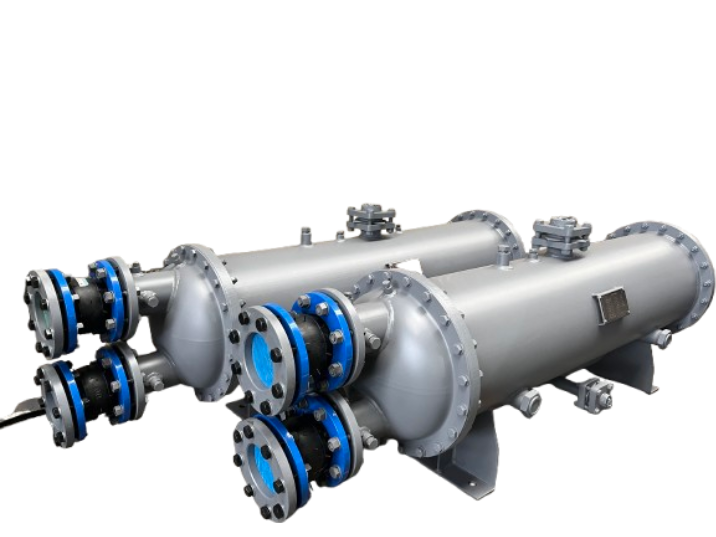
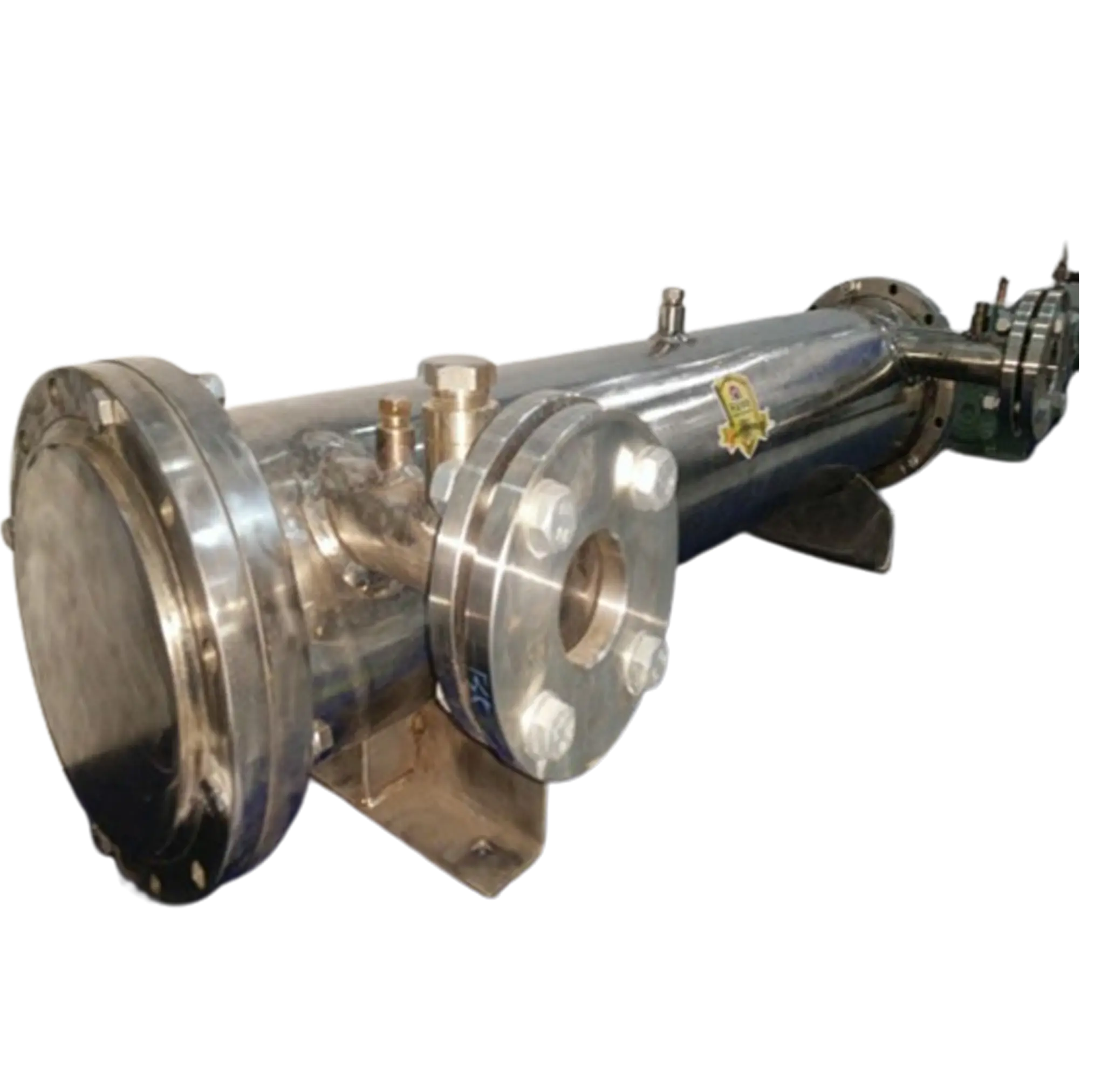
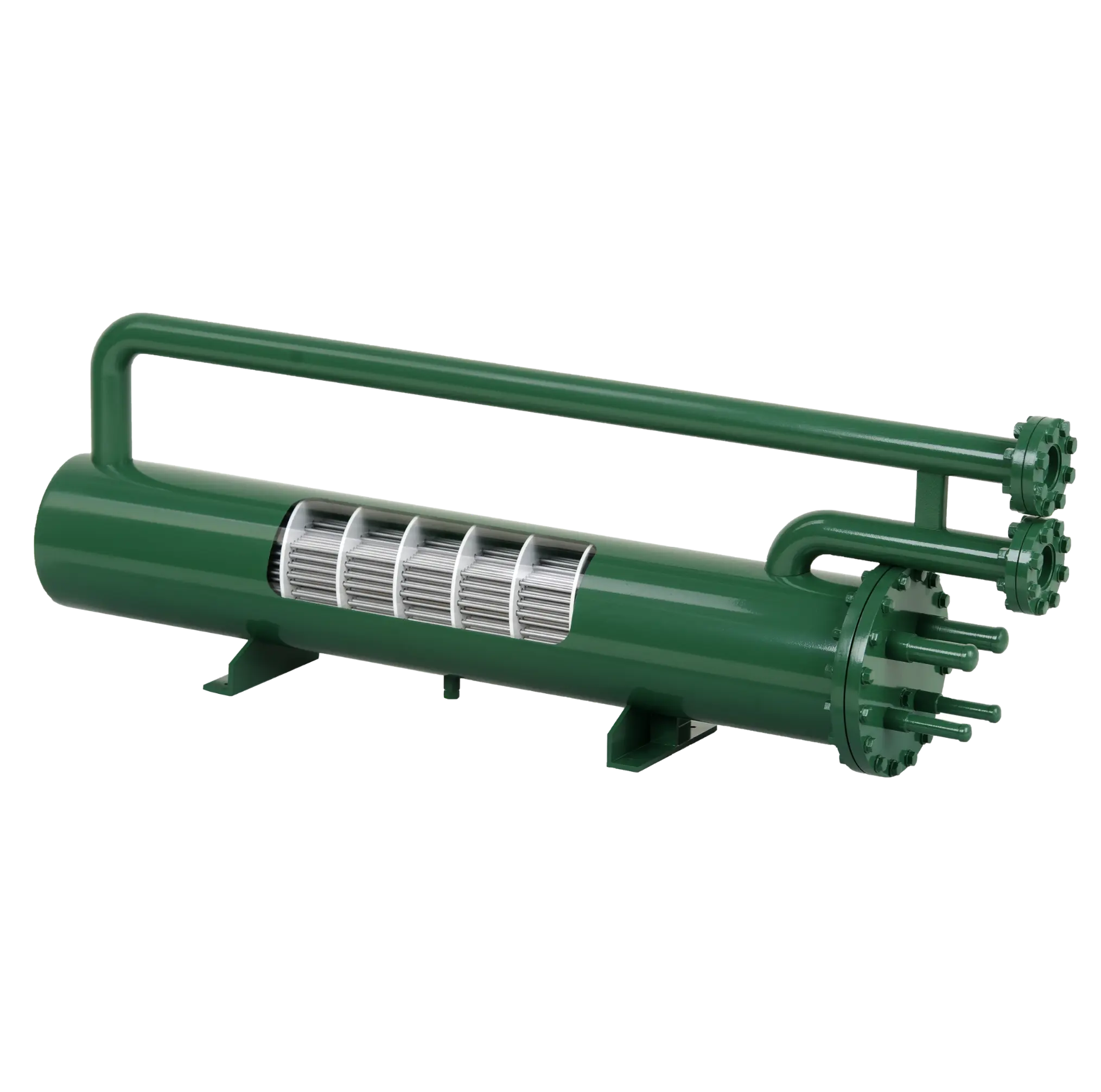
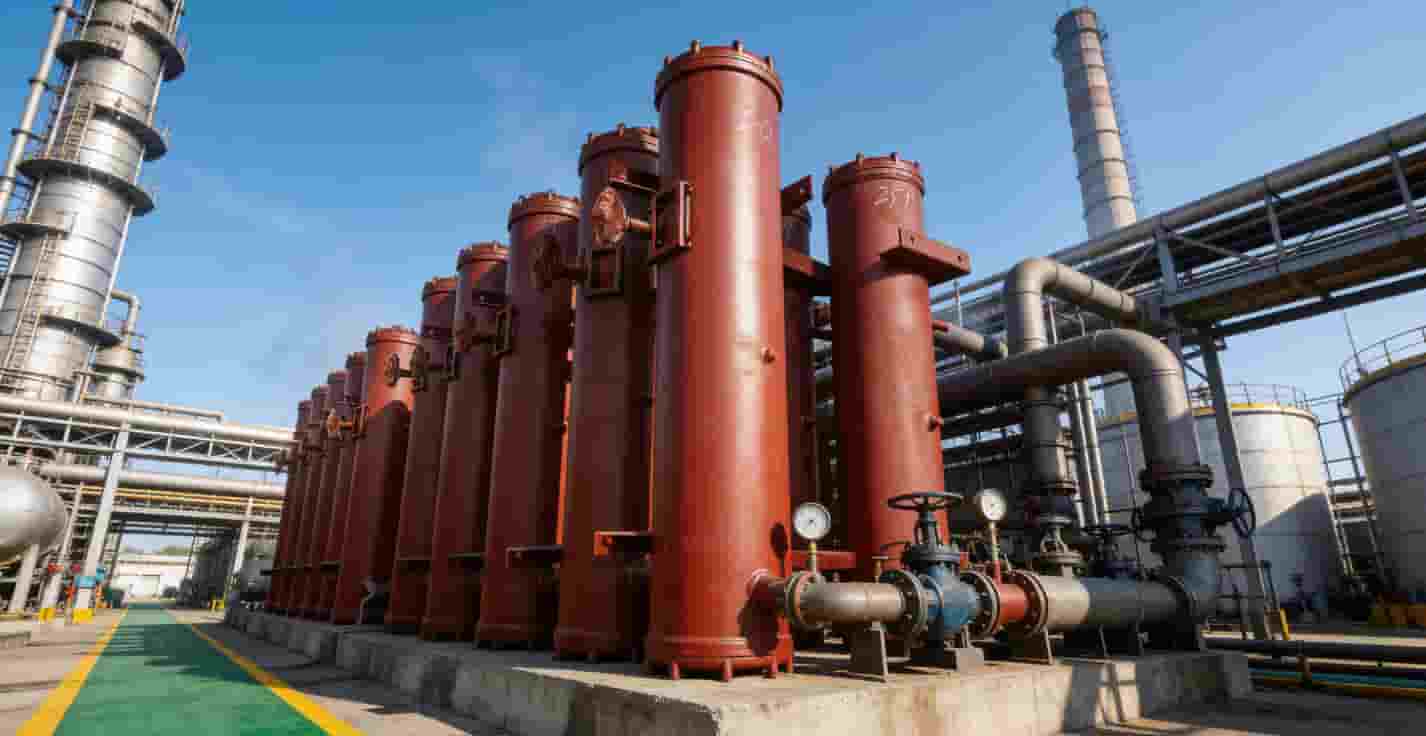
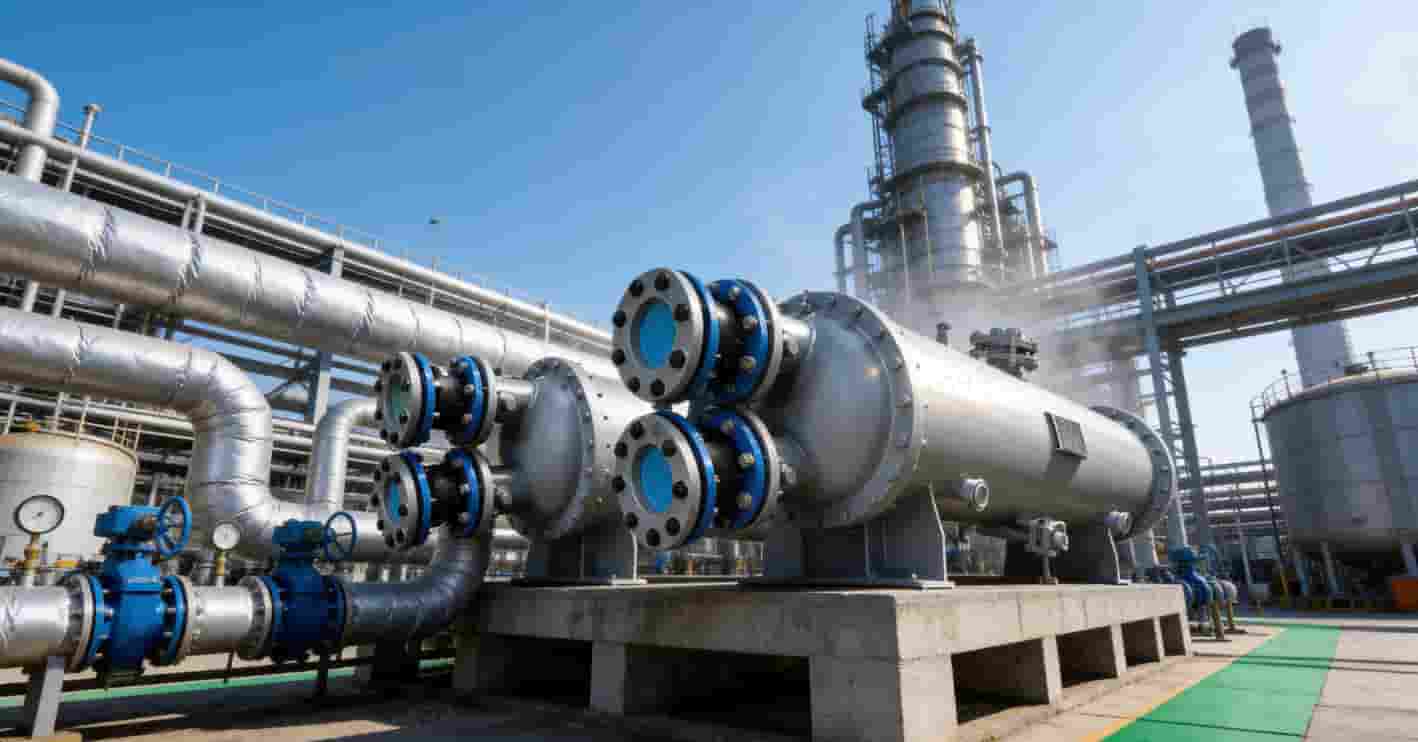
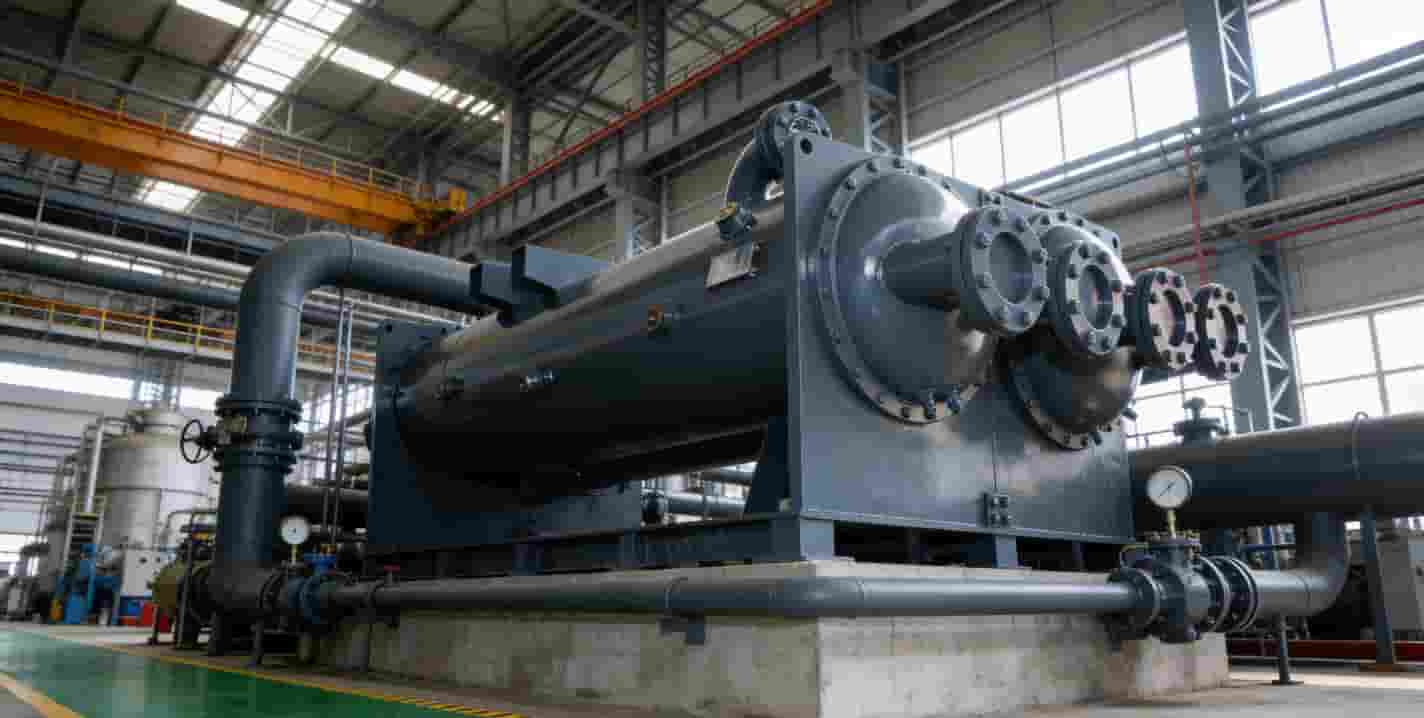
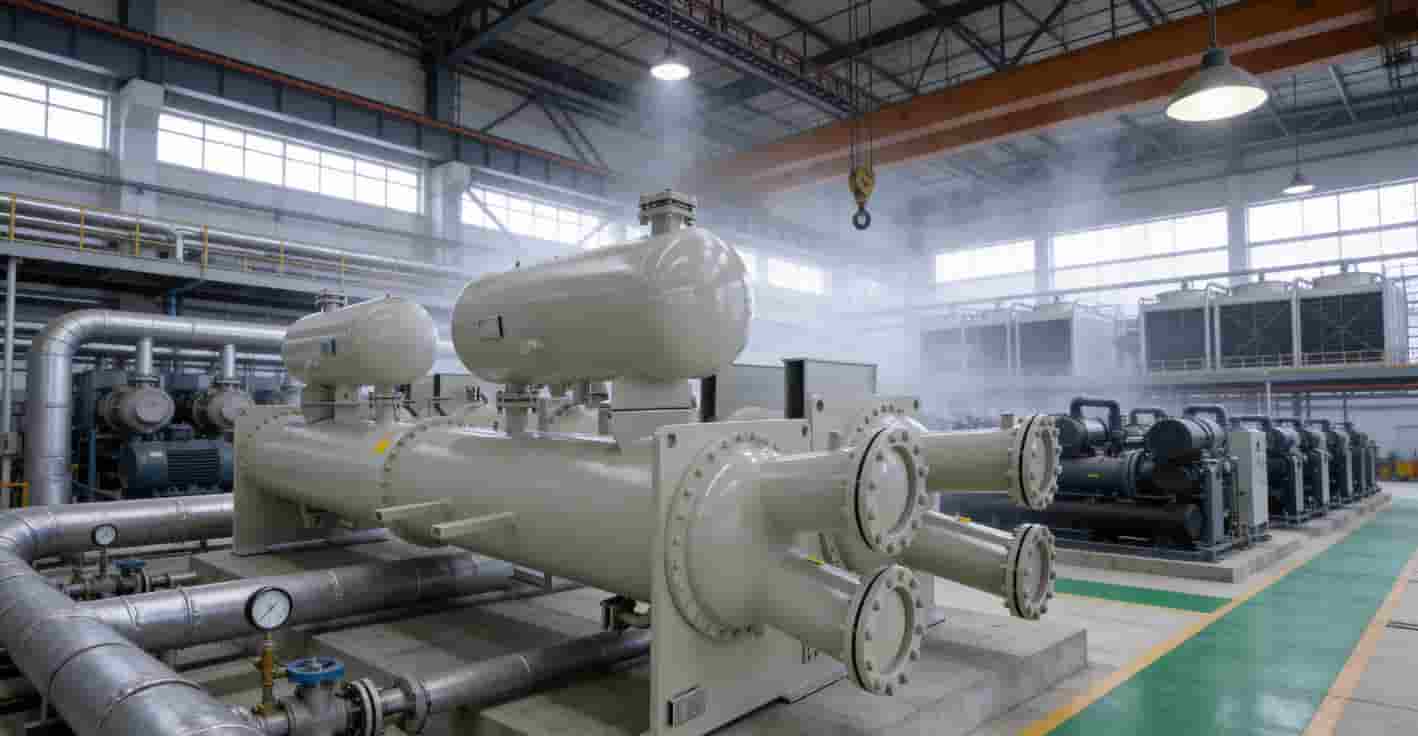
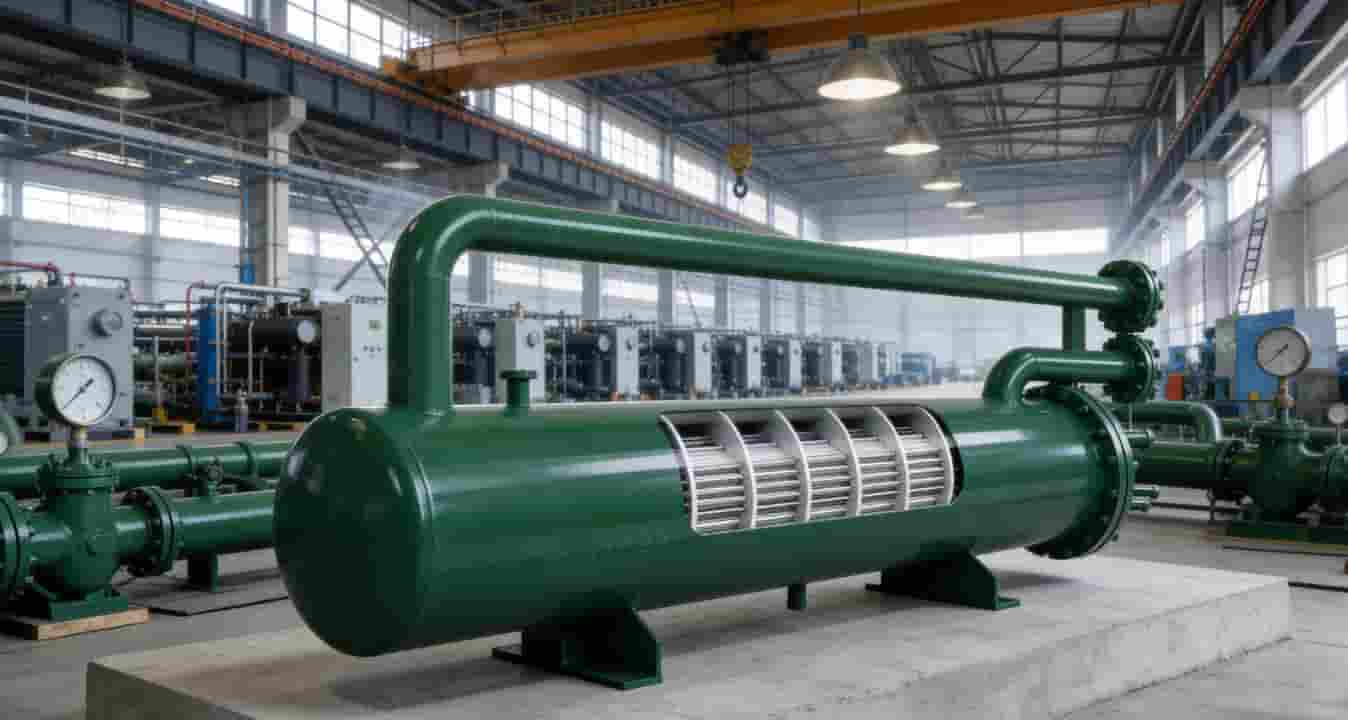
水冷式熱交換器の分野で長年にわたり定評のある製品として、現在、冷凍機市場ではシェルアンドチューブ型熱交換器を生産する企業が百社以上存在しますが、その中で専門的に製造を行っているのは約十社にすぎません。江蘇ホンリー・ヒートEX工業有限公司は、シェルアンドチューブ型熱交換器の専門メーカーです。これらの熱交換器は主に大型設備、例えば中央空調システムや冷蔵・冷凍施設などで使用されます。この特性から、シェルアンドチューブ型熱交換器が故障すると、システム全体に影響を及ぼし、必然的に多大な損失を招くことになります。そのため、シェルアンドチューブ型熱交換器に対する品質要求は極めて高いものとなっています。製品の品質を確保するため、製造工程において材料選定に特に力を入れています。「原材料の選定には厳格な基準を設けています。熱交換器が故障すればシステム全体に影響を及ぼすため、材料選定は細心の注意を払わなければなりません」とホンリー・ヒートEXの徐総経理は述べました。シェルアンドチューブ型熱交換器において、選ばれた材料が基準を満たしていない場合、使用初期には問題が顕在化しないこともありますが、一定期間の運用後に明らかになることがあります。サプライヤー、特にこうした大型製品の部品を供給する立場にある企業にとって、良好な評判がないことは即ち市場での存在感を失うことにつながります。.
昨年と比較すると、シェルアンドチューブ型熱交換器の価格は10%上昇したとされています。原材料価格の高騰や人件費・材料費の増加など、生産コストが引き続き上昇しているため、シェルアンドチューブ型熱交換器業界の利益率はますます薄くなってきています。また、価格情報の迅速な拡散、多数のメーカーの存在、多様な製品タイプなど、さまざまな要因が相まって、業界内での競争は激しさを増しています。シェルアンドチューブ型熱交換器分野にはトップブランドが五、六社程度しかありませんが、それでも利益率が非常に低いため、これらのトップブランド間の競争は依然として激しい状況にあります。.