

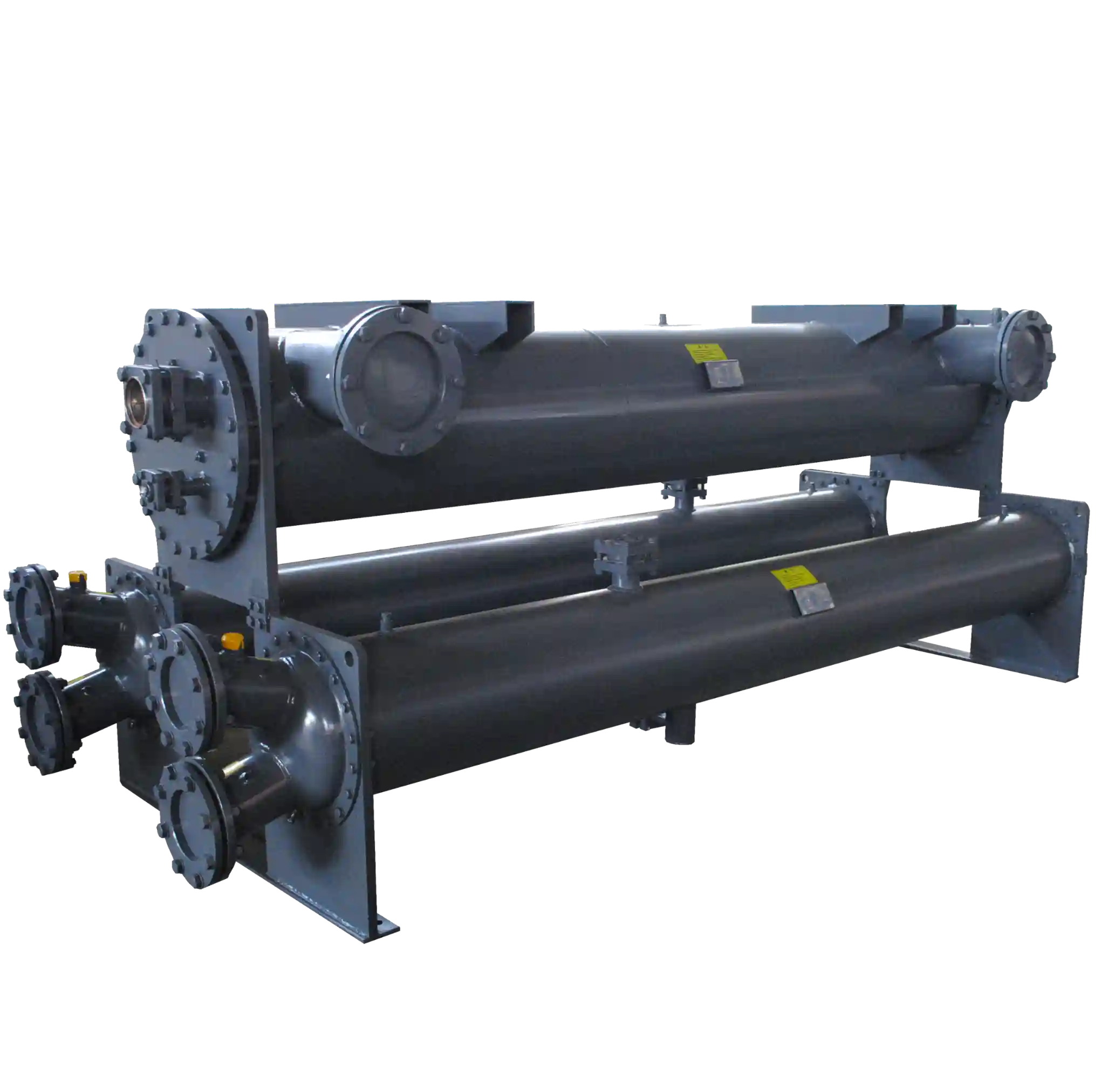
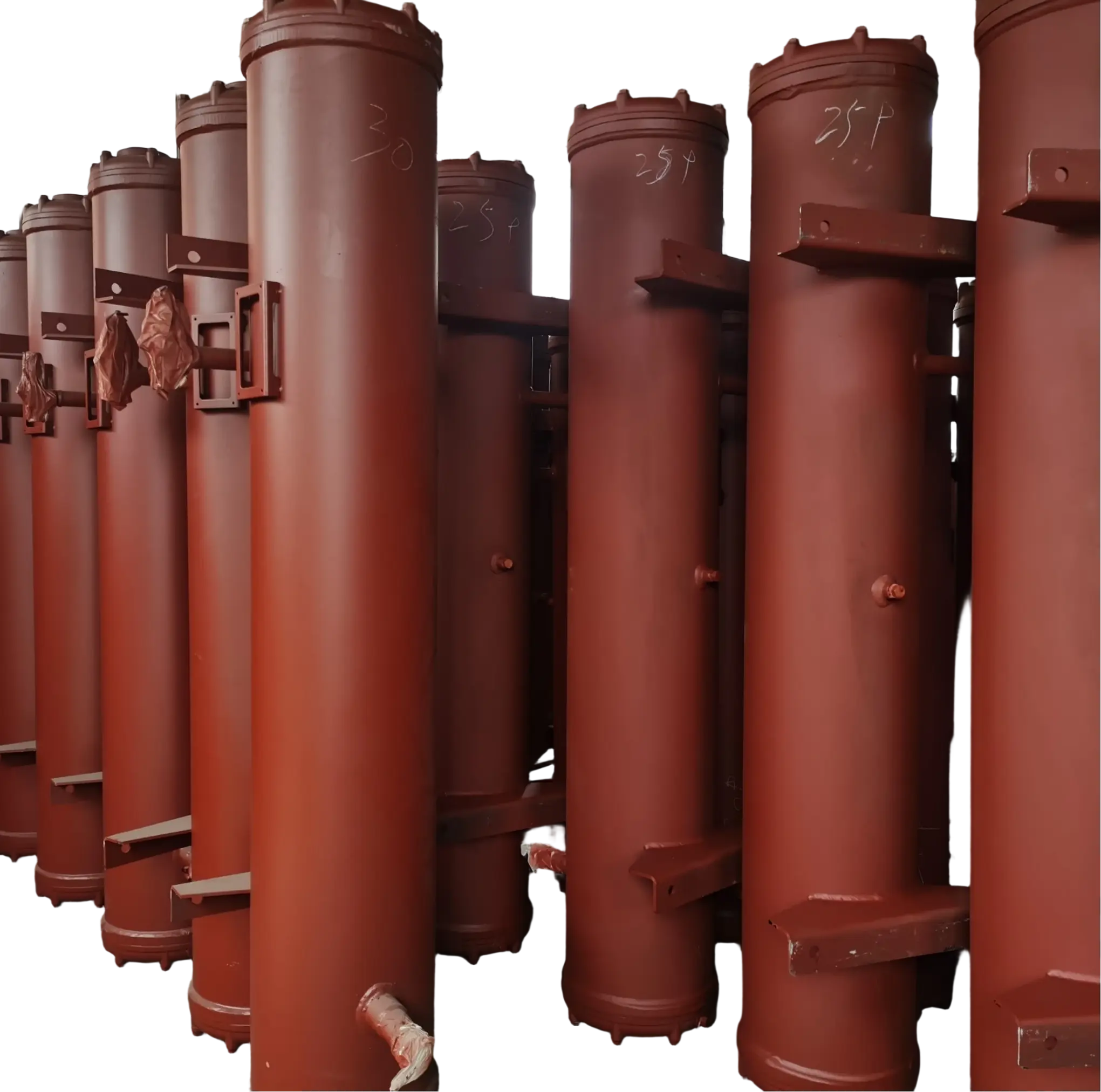
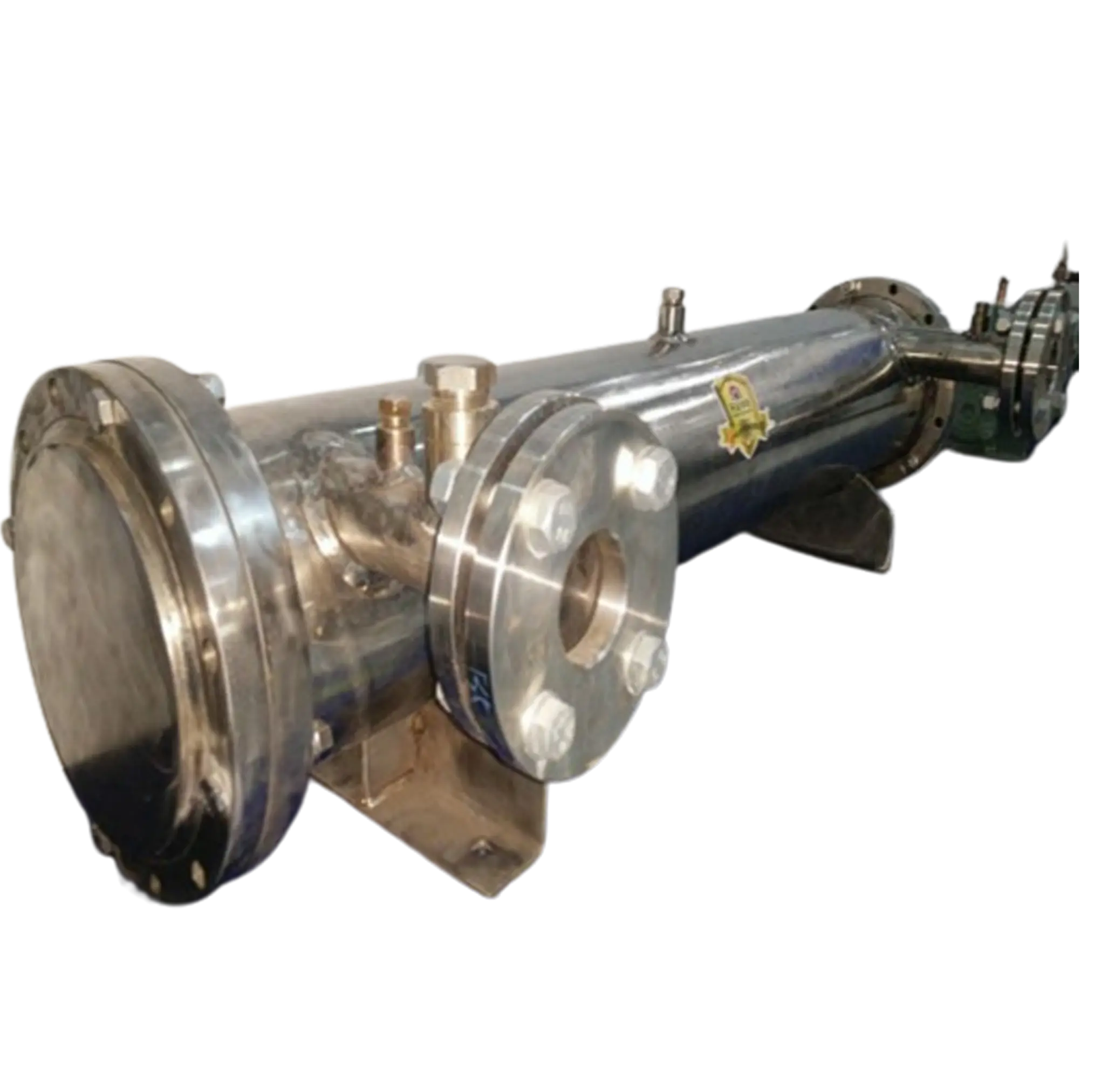
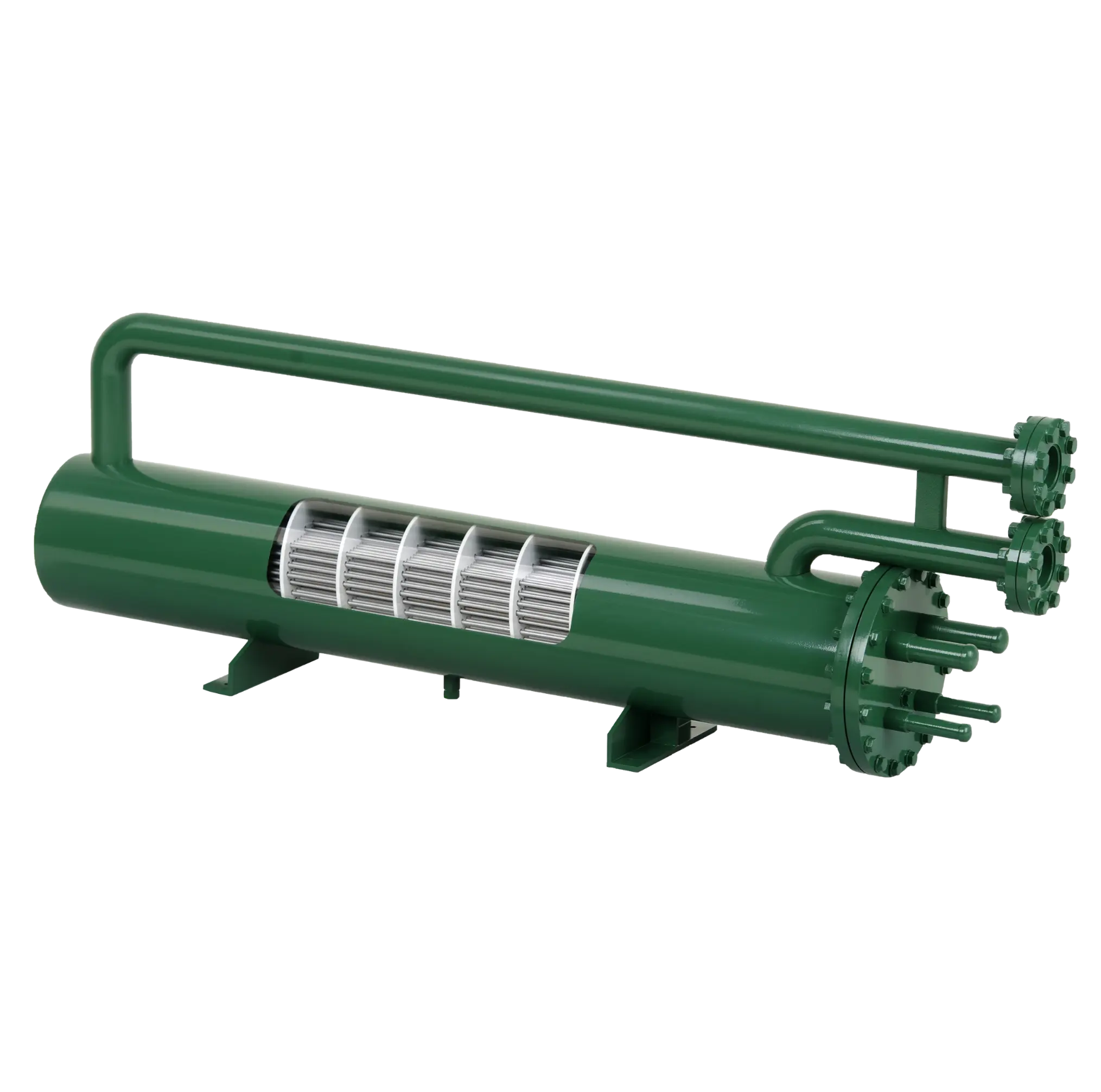
A конденсатор морской воды является разновидностью теплообменника, использующего морскую воду в качестве охлаждающей среды. Он отводит тепло от пара или других горячих технологических жидкостей, превращая пар в жидкость и/или снижая температуру технологических потоков. Благодаря доступности морской воды вблизи прибрежных и морских установок он широко применяется в системах морского судоходства, прибрежной энергетике, офшорных объектах и промышленных системах охлаждения.
Исследования, опубликованные в журналах «Engineering Failure Analysis» и «International Journal of Heat and Fluid Flow», подчеркивают два важных аспекта проектирования теплообменников для морской воды: устойчивость к коррозии и контроль загрязнений, которые могут снизить эффективность теплопередачи.
Что такое конденсатор морской воды?
Конденсатор морской воды — это теплообменник, предназначенный для передачи тепловой энергии от горячего пара или технологического потока морской воде. В обычном паровом конденсаторе выхлопной пар движется по одной стороне поверхности теплообмена, тогда как морская вода циркулирует по другой. Морская вода поглощает тепло, обычно не смешиваясь с паром, что позволяет пару конденсироваться в жидкую воду, которую затем можно собирать и повторно использовать в системе. Точная конфигурация зависит от применения, но конструкции типа «труба в трубе» распространены на крупных морских и прибрежных установках, поскольку они способны обеспечивать значительные потоки охлаждающей воды.
Цель конденсатора морской воды выходит за рамки простого охлаждения горячей жидкости. В паротурбинном цикле эффективная конденсация помогает поддерживать низкое давление на выходе турбины. Это способствует созданию перепада давлений, который обеспечивает расширение турбины и повышает общую эффективность цикла. В морских системах конденсаторы также могут облегчать回收 рабочей жидкости и обеспечивать стабильную работу вспомогательного оборудования. В других промышленных процессах конденсатор, охлаждающийся морской водой, может отводить избыток тепла от холодильных систем, химических производственных систем и офшорных коммунальных систем. Поэтому оборудование должно выбираться с учетом технологической нагрузки, рабочего давления, условий доступной морской воды и требований к надежности.
Важно отличать конденсатор морской воды от общего теплообменника для морской воды. Конденсатор специально предназначен для процесса, в котором пар конденсируется, тогда как теплообменник для морской воды передает тепло между двумя жидкостями без изменения фазы. Это различие влияет на размеры оборудования, поскольку конденсация включает передачу скрытого тепла, и проект должен учитывать паровое давление, дренаж конденсата, неконденсирующиеся газы и доступную разницу температур на поверхности теплообмена.
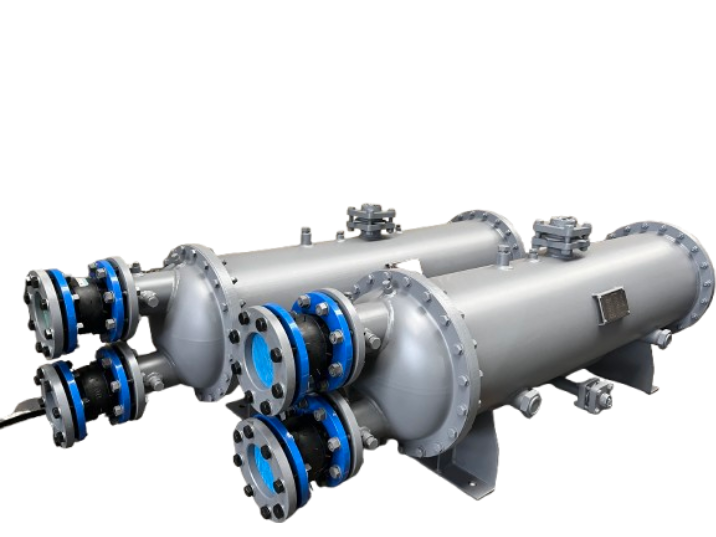
Какова основная цель конденсатора морской воды?
Основная цель конденсатора морской воды — отводить нежелательное тепло от процесса, сохраняя условия, необходимые для эффективной и стабильной работы. В паровых системах конденсатор отводит скрытое тепло от выхлопного пара и возвращает пар в жидкое состояние. Поскольку охлаждающей средой является морская вода, система может обеспечивать непрерывный отвод тепла на прибрежных электростанциях, судах и офшорных объектах без необходимости использования такого же объема пресной воды, как это требуется системам с охлаждением пресной водой.
Хорошо спроектированный конденсатор морской воды выполняет несколько взаимосвязанных функций:
- Отвод тепла: Он передает тепловую энергию от технологической жидкости морской воде, помогая установке или судну поддерживать заданную рабочую температуру и давление.
- Восстановление конденсата: В паровых системах он собирает конденсированную воду, чтобы вернуть ее в питательный или рабочий контур, снижая потребность в замене всего запаса.
- Поддержка термодинамической эффективности: В паротурбинном цикле поддержание соответствующего низкого давления в конденсаторе может увеличить полезное расширение пара через турбину. Реальная эффективность зависит от конструкции турбины, температуры охлаждающей воды, чистоты конденсатора и других эксплуатационных условий.
- Стабильность работы: Правильное управление потоком охлаждающей воды, вакуумными условиями там, где это необходимо, и удалением конденсата помогают предотвратить ухудшение производительности и незапланированные остановки.
- Эти функции взаимозависимы. Конденсатор, эффективно передающий тепло при пуске, может стать менее эффективным, если его трубки покрываются отложениями, поток морской воды ограничен или утечки воздуха увеличивают концентрацию неконденсирующихся газов. Поэтому выбор конденсатора должен учитывать всю эксплуатационную систему, а не только площадь теплообмена.Как работает конденсатор морской воды?.
Обычный конденсатор морской воды работает по принципу косвенного теплообмена. Горячий выхлопной пар поступает в корпус конденсатора и контактирует с внешними поверхностями труб, по которым циркулирует более холодная морская вода; в специализированном оборудовании эта схема может быть и обратной. Тепло передается через стенку труб от конденсирующегося пара к охлаждающей воде, вызывая освобождение скрытого тепла паром и превращение его в жидкость-конденсат. Затем нагретая морская вода покидает конденсатор и либо сбрасывается, либо направляется в другую часть системы охлаждения в зависимости от конфигурации установки.
Этот процесс зависит от поддержания достаточной разницы температур между конденсирующимся паром и морской водой. В паровой электростанции конденсатор обычно работает под вакуумом, чтобы паровая турбина могла выпускать пар при давлении ниже атмосферного. Воздух и другие неконденсирующиеся газы должны удаляться, поскольку они могут накапливаться возле поверхностей теплообмена и снижать эффективность теплопередачи, одновременно повышая давление внутри конденсатора. Конденсат собирается и удаляется через соответствующую дренажную систему, а оборудование для удаления воздуха помогает поддерживать необходимые эксплуатационные условия.
Упрощенная последовательность работы выглядит следующим образом:.
Забор морской воды.
: Морская вода забирается из моря через систему забора, обычно с сетками или другими защитными устройствами, чтобы ограничить попадание мусора в охлаждающий контур.
- Циркуляция охлаждающей воды: Насосы подают морскую воду через трубки конденсатора или специальные охлаждающие каналы с требуемым расходом.
- Конденсация пара: Пар или другой конденсирующийся пар отдает тепло через поверхность теплообмена и превращается в жидкость.
- Отвод тепла: Морская вода покидает конденсатор с повышенной температурой и возвращается в море или направляется в разрешенную нижестоящую систему охлаждения.
- Управление конденсатом и газами: Конденсат собирается, тогда как неконденсирующиеся газы удаляются там, где это требуется процессом.
- Точная конфигурация зависит от типа конденсатора и его назначения. Например, морской паровой конденсатор может быть интегрирован в силовую установку, тогда как прибрежная электростанция может использовать крупный поверхностный конденсатор с тысячами трубок. В любом случае надежная работа зависит от согласования контура охлаждающей воды, поверхностей теплообмена, дренажа конденсата и систем мониторинга.Где используются конденсаторы морской воды?.
Конденсаторы морской воды особенно ценны там, где необходимо отводить большие количества тепла и имеется надежный источник морской воды. Их применение варьируется от крупных энергетических установок до компактного морского оборудования, однако базовое требование остается одинаковым: отводить тепло, сохраняя технологическую жидкость отделенной от охлаждающей среды, когда важны вопросы загрязнения или восстановления.
Прибрежные электростанции
: Поверхностные конденсаторы конденсируют выхлопной пар турбины, поддерживают восстановление конденсата и помогают поддерживать низкое давление на выходе, необходимое для парового цикла.
- Суда и системы морского судоходства: Конденсаторы поддерживают оборудование, работающее на паре, и связанные с ним тепловые системы, где доступность пресной воды и ограниченное пространство делают охлаждение морской водой привлекательным.
- Ships and marine propulsion systems: Condensers support steam-driven equipment and related thermal systems, where freshwater availability and space constraints can make seawater cooling attractive.
- Офшорных платформах: Оборудование с охлаждением морской водой отводит тепло от коммунальных и технологических систем в условиях, где традиционная наземная инфраструктура охлаждения может отсутствовать.
- Промышленные и химические объекты: В выбранных процессных конденсаторах используется морская вода для конденсации паров или回收 процессных жидкостей при условии, что материалы совместимы с технологической жидкостью и морской средой.
- Морские холодильные и вспомогательные системы: В зависимости от конструкции, конденсаторы с охлаждением морской водой могут отводить тепло от холодильного оборудования и других тепловых систем.
Не каждая морская или прибрежная установка должна автоматически использовать охлаждение морской водой. Решение зависит от местной температуры морской воды, солености, содержания взвешенных твердых частиц, биологической активности, глубины забора воды, экологических ограничений по сбросу и стоимости обслуживания коррозионно-устойчивого оборудования. В местах с высоким потенциалом биообрастания или значительной нагрузкой осадков проект забора воды и меры по очистке могут быть столь же важны, как и сам конденсатор.
Основные компоненты конденсатора для морской воды
A seawater condenser is part of a wider cooling and condensate-handling system. Its principal components must be selected to provide the required heat-transfer capacity while withstanding the combined effects of seawater chemistry, flow conditions, temperature, and mechanical stress.
| Компонент | Основная функция | Important design consideration |
| Heat-transfer tubes or plates | Transfer heat from the process fluid to seawater | Corrosion resistance, thermal performance, fouling, and mechanical integrity |
| Shell or condenser body | Contains the process-side fluid and supports the heat-transfer bundle | Design pressure, vacuum requirements, structural strength, and accessibility |
| Water boxes and tube sheets | Distribute seawater into and out of the tube bundle | Material compatibility, sealing, and inspection access |
| Seawater pumps | Maintain the required cooling-water flow | Flow capacity, hydraulic losses, energy use, and redundancy |
| Intake screens and strainers | Limit debris entering the cooling circuit | Debris loading, cleaning frequency, and pressure drop |
| Condensate collection system | Collect and remove the condensed liquid | Drainage capacity, condensate quality, and air ingress prevention |
| Air-removal equipment | Remove non-condensable gases where required | Required vacuum level, gas load, and operating reliability |
| Instrumentation and controls | Monitor temperature, pressure, flow, and differential pressure | Sensor accuracy, alarm limits, and trend analysis |
The choice of materials deserves particular attention. Titanium is widely used for seawater condenser tubes because of its strong resistance to seawater corrosion, while copper-nickel alloys and other materials may be suitable in particular applications depending on water chemistry, velocity, and operating conditions. No material is immune to every failure mechanism: poor installation, unsuitable flow conditions, deposits, galvanic interactions, or inadequate maintenance can undermine even a carefully selected material. A study in Engineering Failure Analysis documented titanium condenser-tube damage associated with severe mineral scaling and erosion-corrosion, demonstrating why material selection must be combined with sound hydraulic and maintenance practices.
How to Choose the Right Seawater Condenser?
The selection of a condenser begins with a defined thermal duty. Engineers need to know the heat load, the composition of the process fluid, the inlet and outlet temperatures, the operating pressure, the required condensation rate, and the allowable pressure drop. For steam applications, the design must also account for the target condenser pressure and the impact of seawater temperature on achievable performance. While these parameters indicate the required heat-transfer area and cooling-water flow, final sizing requires an appropriate thermal design method and verified operating data.
The seawater environment introduces additional selection criteria. Temperature and salinity influence cooling performance and corrosion behaviour, while suspended solids, marine organisms and mineral precipitation can contribute to fouling. The condenser should also be designed to accommodate expected variations in seasonal water conditions because a unit sized using only the most favourable seawater temperature may struggle during warmer periods. Access for inspection, tube cleaning, leak detection, and maintenance should be considered at the design stage, rather than being added once performance begins to decline.
A practical selection process includes these steps:
- Define the duty and operating envelope. Specify heat load, process pressure, condensation requirements, seawater temperatures, flow limits, and permitted pressure drops.
- Evaluate materials and compatibility. Review the seawater chemistry, process fluid, tube and tube-sheet materials, gasket compatibility, and potential galvanic couples.
- Assess fouling and cleaning strategy. Consider intake screening, tube-cleaning methods, monitoring provisions, and the expected maintenance interval.
- Compare lifecycle costs. Evaluate capital cost alongside pumping energy, cleaning, inspections, downtime risk, spare parts, and expected service life.
- Confirm environmental and site requirements. Check seawater intake and discharge conditions, local permits, temperature limits, and any restrictions on treatment chemicals.
The lowest initial purchase price is not necessarily the most economical option. A condenser that requires frequent cleaning, consumes excessive pumping energy, or suffers repeated tube failures can create substantial operating costs over its service life. Conversely, selecting premium materials without evaluating the actual operating conditions may increase capital expenditure without a proportional improvement in reliability.
Common Seawater Condenser Problems and How to Prevent Them
Fouling and scaling are among the most important causes of declining condenser performance. Suspended particles, biological growth, corrosion products, and precipitated minerals can accumulate on heat-transfer surfaces. These deposits add thermal resistance, restrict the flow area, and may increase pressure drop, forcing the system to work harder to transfer the same amount of heat. A 2026 study in the International Journal of Heat and Fluid Flow investigated fouling development in titanium-alloy seawater heat-exchanger tubes and described how deposit growth can increase thermal resistance and compromise performance even when corrosion-resistant materials are used.
Corrosion, erosion, and tube leakage require a different but related response. Seawater contains chloride ions and other constituents that make material compatibility critical, while excessive local velocity or suspended solids can contribute to erosion and erosion-corrosion. Leakage can also result from mechanical damage, poor installation, unsuitable material combinations, or localized deterioration beneath deposits. Preventive measures include appropriate material selection, controlled flow conditions, intake management, periodic inspections, and a documented response plan for suspected tube leaks.
Loss of condenser vacuum or reduced heat-transfer capacity can arise from air ingress, insufficient cooling-water flow, fouled tubes, or abnormal operating conditions elsewhere in the system. Operators should trend condenser pressure, cooling-water inlet and outlet temperatures, water-side differential pressure, and relevant process temperatures. Changes should be assessed together rather than interpreted in isolation: for example, a rising condenser pressure accompanied by higher outlet-water temperature may point toward reduced heat-rejection capacity, but confirmation requires checking flow, ambient conditions, gas-removal performance, and instrumentation.
A preventive maintenance program should combine routine operating checks with planned inspection and cleaning. The appropriate interval depends on seawater quality, system design, operating hours, and observed fouling rates; a fixed schedule should be adjusted when monitoring data show that deposits are accumulating faster or slower than expected. Cleaning methods must be compatible with the tube material and deposit type, because aggressive mechanical or chemical cleaning can damage the very surfaces it is intended to protect.
How Does a Seawater Condenser Affect Energy Efficiency?
In a steam power cycle, the performance of the condenser influences the pressure at which the steam leaves the turbine. Provided that the turbine and the rest of the plant are designed to operate under those conditions, a lower exhaust pressure can increase the turbine’s available expansion and improve cycle efficiency. However, when the condenser becomes fouled, or the flow of cooling water is insufficient, heat transfer deteriorates, and the condensing pressure may rise. This can result in reduced output or efficiency, depending on the operating point and control strategy of the system.
However, maximising condenser performance does not mean using unlimited seawater flow. While higher flow rates can improve heat transfer in certain operating ranges, they also increase pumping energy requirements and may raise the risk of erosion if velocities become excessive. The optimal operating point balances heat-transfer performance against pump power, material limitations, fouling behaviour and environmental constraints. Rather than optimising a single temperature or pressure reading independently, engineers should assess the condenser as part of the whole plant.
Useful performance indicators include condenser pressure or vacuum, cooling-water inlet and outlet temperatures, cooling-water flow, water-side differential pressure and trends in heat-transfer performance. Establishing a clean-condition baseline makes it easier to detect gradual degradation and plan maintenance before any loss becomes operationally significant.
Seawater Condenser FAQs
- What is the main purpose of a seawater condenser?
The main purpose of a seawater condenser is to remove heat from steam or another hot process fluid by transferring it to seawater. In steam power systems, it also condenses exhaust steam so the liquid can be recovered and the condenser can maintain the required operating pressure.
- How does a seawater condenser work?
Seawater flows through designated passages or tubes while the hot vapor transfers heat across a separating surface. The vapor condenses into liquid as the seawater warms and carries the rejected heat away.
- Why is seawater used in condensers?
Seawater is often available in large quantities near ships, coastal power plants, and offshore facilities, making it a practical cooling medium. Its use still requires careful management of corrosion, fouling, seawater intake, and discharge conditions.
- What materials are commonly used for seawater condenser tubes?
Titanium and selected copper-nickel alloys are used in seawater condenser applications because of their corrosion resistance under suitable operating conditions. The final choice depends on seawater chemistry, flow velocity, process requirements, mechanical design, and lifecycle cost.
- What causes a seawater condenser to lose efficiency?
Common causes include fouling, mineral scaling, restricted cooling-water flow, air ingress, and tube damage. Monitoring pressure, temperature, flow, and differential pressure helps identify deterioration before it leads to serious performance loss.
- How often should a seawater condenser be cleaned?
There is no universal cleaning interval because fouling rates vary with seawater quality, operating temperature, flow conditions, and condenser design. Cleaning should be scheduled using manufacturer guidance, inspection findings, and operating trends while ensuring that the selected method is suitable for the tube material.
Заключение
The purpose of a seawater condenser is to efficiently reject heat, condense vapour where required, and help maintain stable operating conditions in marine, coastal, and offshore systems. Its performance depends on more than just the heat-transfer area; factors such as material compatibility, cooling-water flow, condensate management, air removal, fouling control, and maintenance access also contribute to reliable operation. When selecting a seawater condenser, engineers should consider thermal duty, seawater conditions, corrosion risks, lifecycle costs, and environmental requirements as a whole. Taking this integrated approach helps to maintain heat-transfer efficiency, reduce unplanned downtime, and extend the service life of equipment in demanding marine environments.