
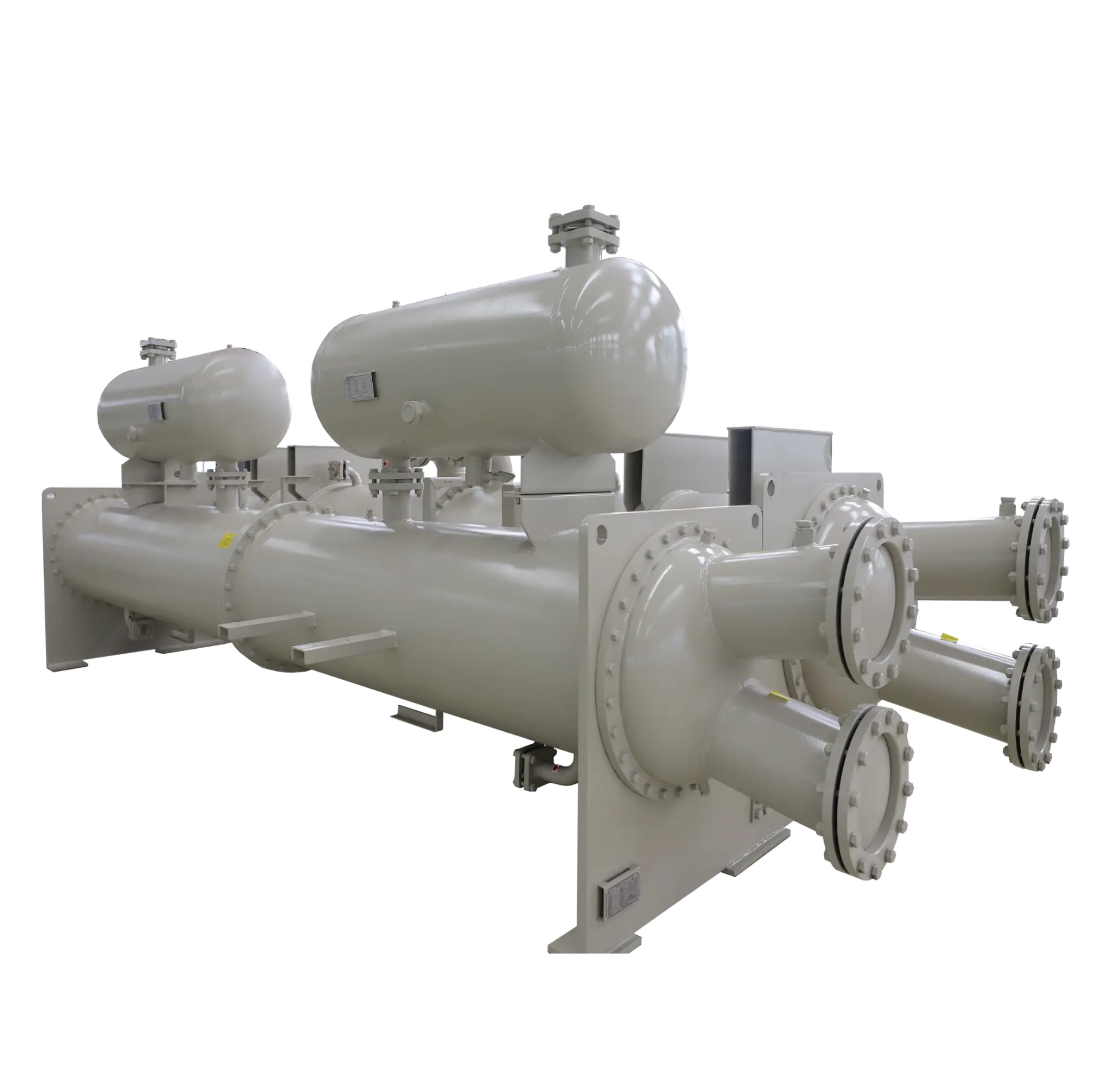
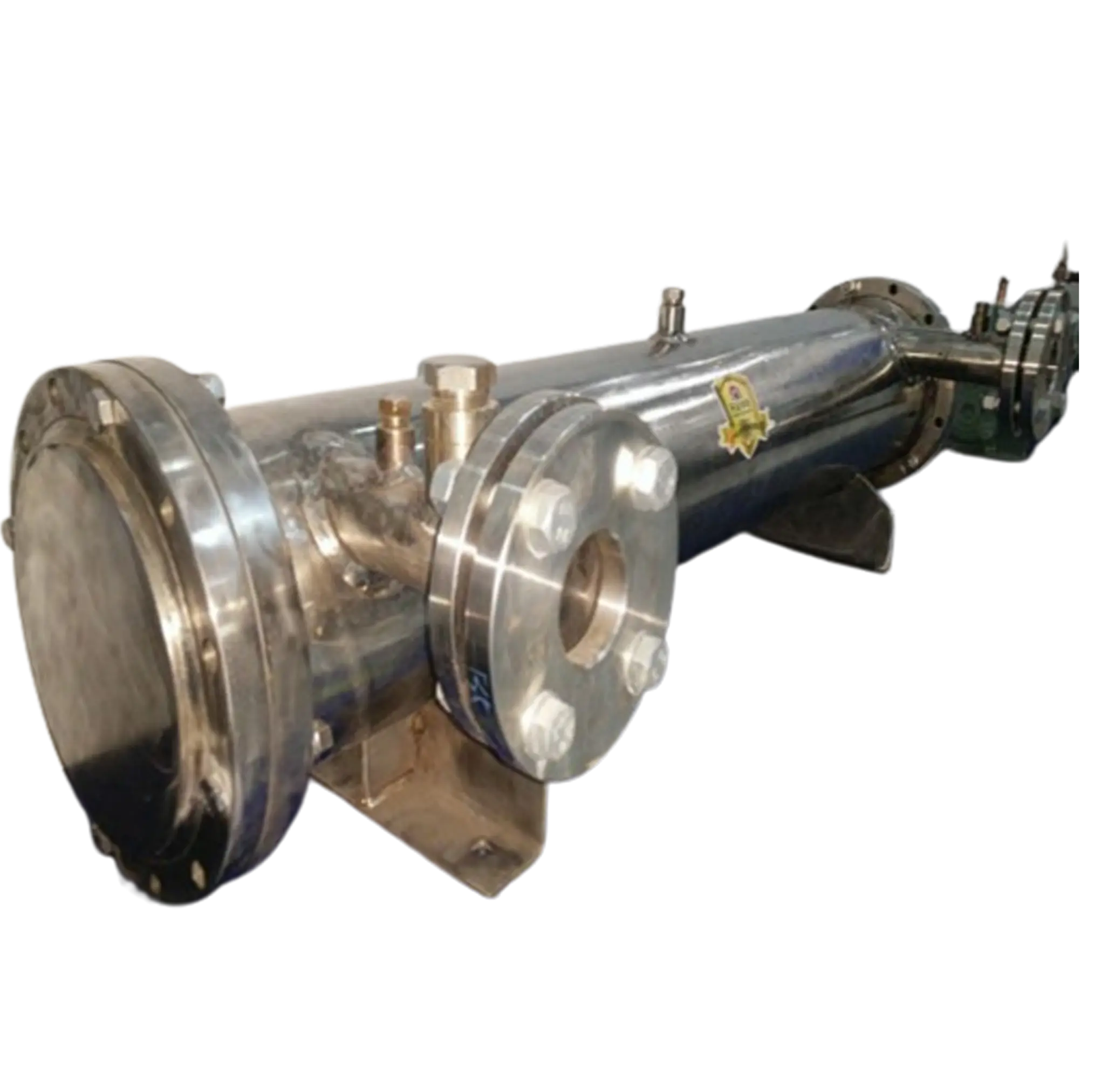
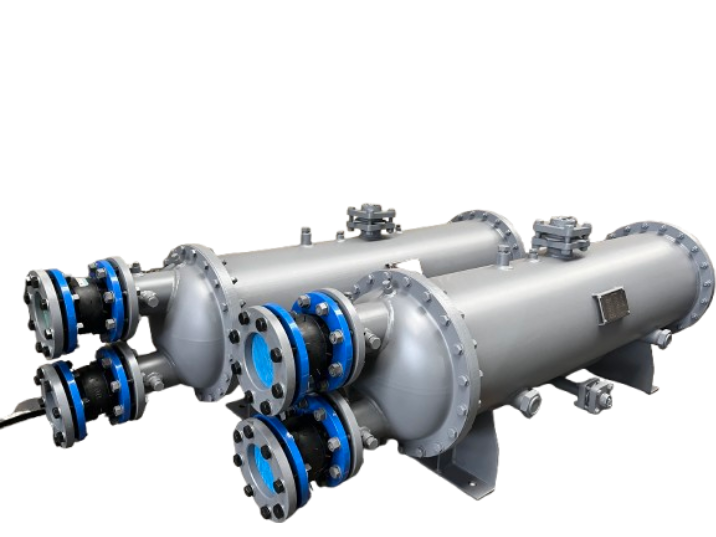
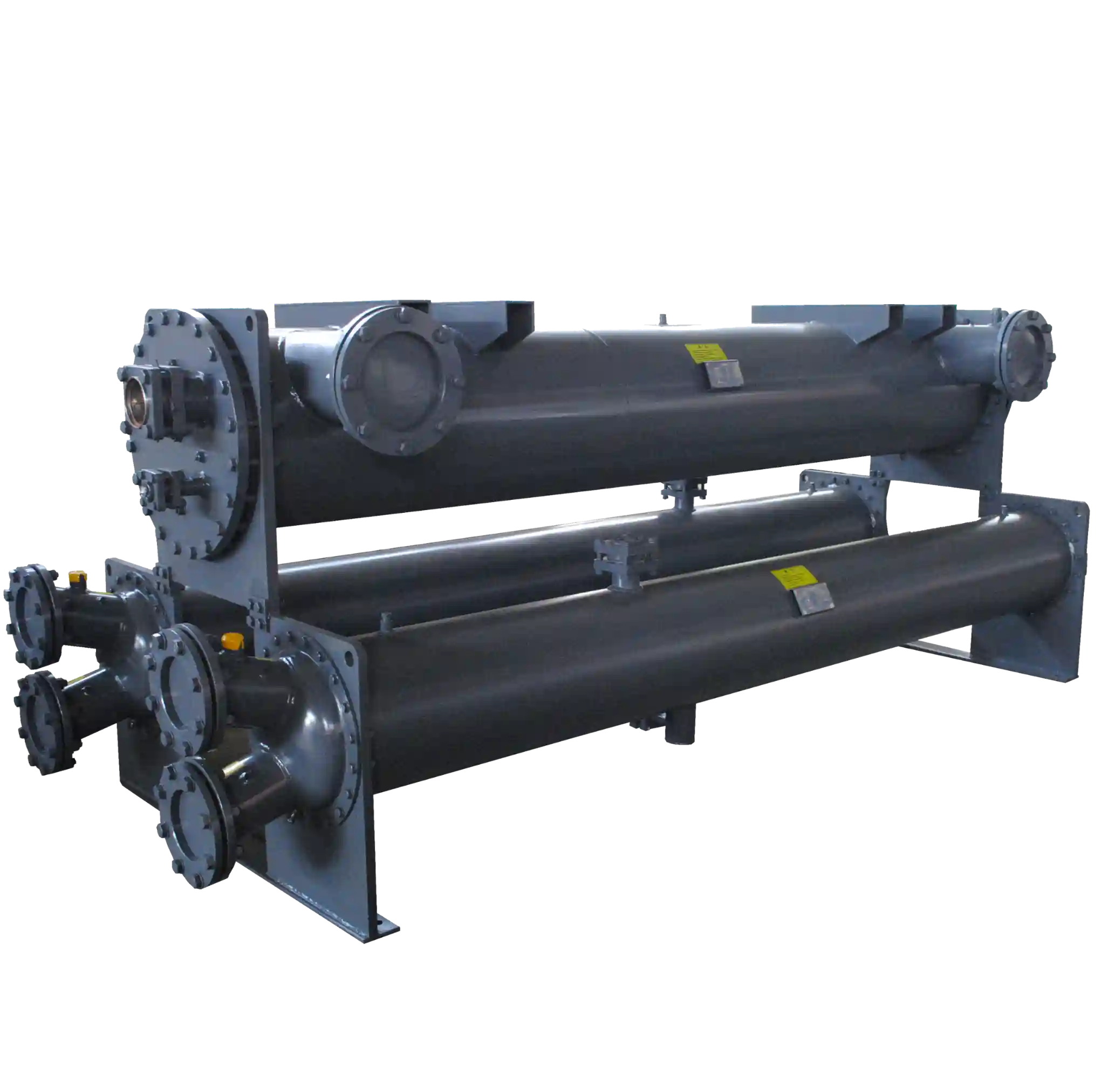
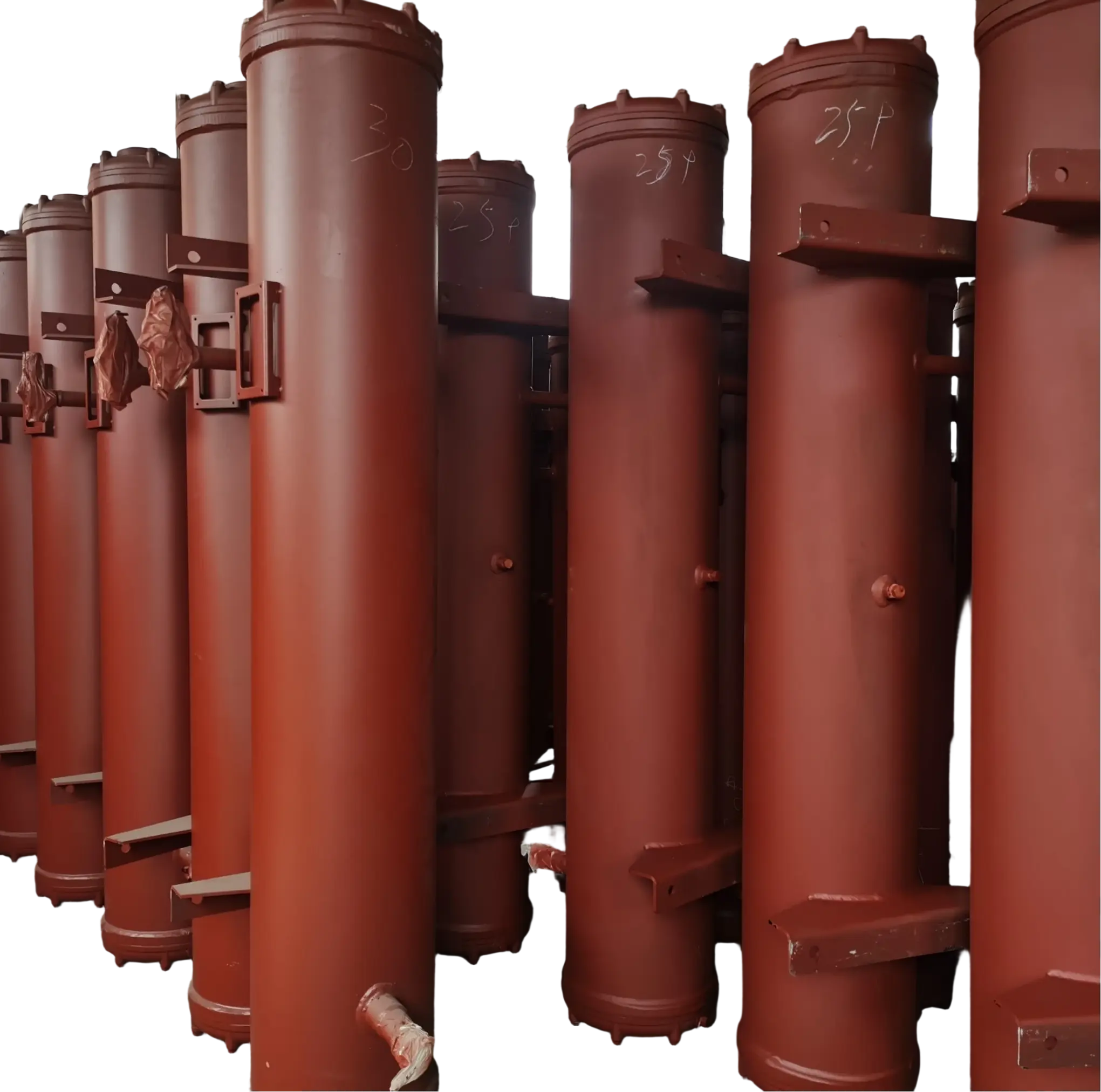
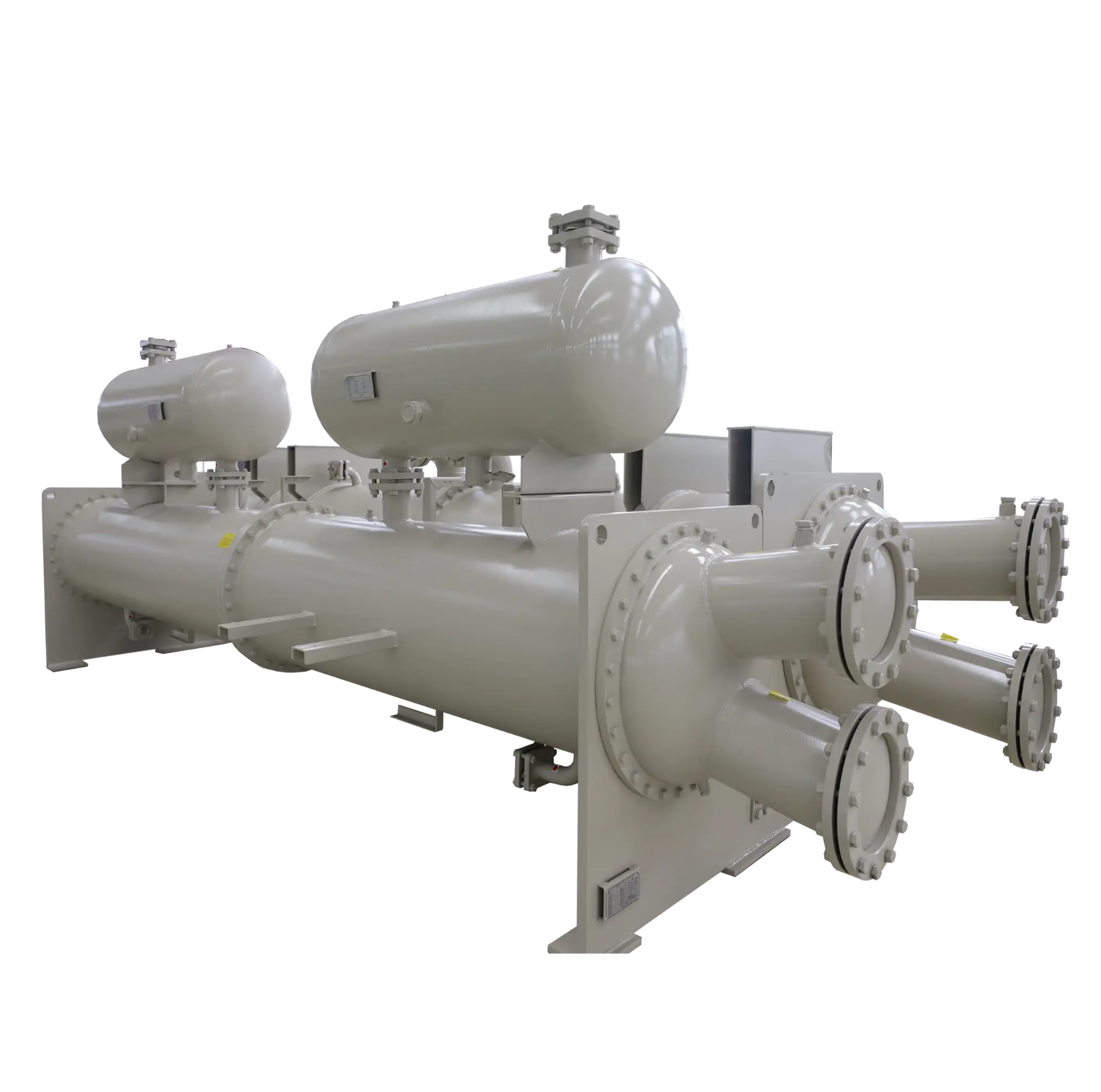
A falling film evaporator feeds liquid to the top of a heating surface, where it forms a thin film that flows downwards under gravity. A rising film evaporator, on the other hand, feeds liquid from the bottom and uses vapour generation and buoyancy to drive the liquid film upwards. Falling film designs generally provide a short residence time, low liquid retention, and are well suited to heat-sensitive products. Rising film systems, on the other hand, can offer simpler liquid distribution and effective natural circulation operation when the feed and viscosity are suitable. Reviews published in the International Journal of Refrigeration, Applied Thermal Engineering and International Communications in Heat and Mass Transfer identify liquid-film distribution, heat-transfer behaviour, flow regime and film stability as key factors affecting evaporator performance.
What Is the Difference Between a Falling Film Evaporator and a Rising Film Evaporator?
The fundamental difference lies in the direction in which the liquid film travels through the heating tubes, and the force responsible for that movement. In a falling film evaporator, the liquid is distributed at the top of vertical tubes and flows downwards as a thin film, primarily due to gravity. In a rising-film evaporator, the feed enters near the bottom of the tubes, where heating generates vapour bubbles and vapour flow that carry the liquid upwards.
This difference alters almost every important operating characteristic of the equipment. In the falling-film arrangement, liquid distribution and vapor generation are separate processes: the liquid must first be distributed evenly over the heating surface, and then descend while evaporation takes place. In contrast, the rising-film arrangement depends more strongly on the development of vapour velocity inside the tubes. This means that the evaporator requires appropriate heat input and operating conditions before the desired upward circulation is established.
The distinction is therefore more meaningful than simply saying that one evaporator moves liquid downward and the other moves it upward. The direction of flow determines the hydrodynamics, residence time, heat-transfer behavior, startup characteristics, liquid distribution requirements, and suitability for different feed materials.
| Feature | Falling Film Evaporator | Rising Film Evaporator |
| Liquid feed location | Usually enters at the top | Usually enters at the bottom |
| Film direction | Downward | Upward |
| Main driving force | Gravity | Vapor generation and buoyancy |
| Liquid distribution | Requires careful top distribution | Naturally develops with vapor-liquid flow |
| Residence time | Generally short | Generally short, but depends on circulation conditions |
| Liquid holdup | Low | Relatively low |
| Heat-sensitive products | Highly suitable | Suitable when process conditions permit |
| Viscous feeds | Can become challenging at high viscosity | Can handle some feeds, but vapor circulation may be affected |
| Fouling sensitivity | Distribution and dry-out are important concerns | Fouling can strongly affect circulation |
| Typical configuration | Long vertical tubes, multiple effects | Long vertical heating tubes |
| Key design issue | Uniform film formation | Stable vapor-liquid upward flow |
How Does a Falling Film Evaporator Work?
In a falling film evaporator, the liquid feed is distributed across the upper section of the heating tubes. This is achieved using a distributor, spray system, or perforated plate, among other distribution arrangements. The liquid is introduced so that it forms a continuous or sufficiently uniform film on the internal tube walls. This film then moves downwards, with the heat supplied through the tube wall causing some of the liquid to evaporate.
The aim is to maintain a thin, continuously renewed film of liquid over the heating surface. A thinner film reduces the distance that heat must travel through the liquid layer, while the liquid continually moves downwards to replace that exposed to the heated wall. This combination contributes to efficient evaporation and helps to keep residence time low.
However, achieving efficient falling film evaporation is not simply a matter of making the liquid layer as thin as possible. If the liquid flow rate is too low or distribution is poor, sections of the heating surface may not be adequately wetted. Film rupture or dry-out can sharply reduce local heat transfer and may result in excessive wall temperatures. Modern reviews emphasise that film thickness, uniformity of the film, flow pattern and dry-out are important variables when predicting the performance of a falling-film evaporator.
This is why the distributor is one of the most critical components in a falling-film evaporator. Even an excellent theoretical heat-transfer surface cannot compensate for uneven feed distribution, which leaves part of the tube bundle under-wetted while concentrating too much liquid in other areas.
How Does a Rising Film Evaporator Work?
A rising film evaporator operates according to a different hydrodynamic principle. Liquid enters the lower part of the heating tubes and begins to heat up as it moves upwards. As evaporation produces vapour within the tubes, the vapour-liquid mixture becomes less dense, creating an upward driving force that assists in carrying the liquid along the tube wall.
Once sufficient vapour generation has been established, the process can therefore become self-supporting. The upward movement of vapour accelerates the liquid film, increasing turbulence and interfacial renewal and thus contributing to heat transfer. The vapour and concentrated liquid then exit the upper portion of the heating section and are separated downstream.
One advantage of this arrangement is that it does not require the same type of top-mounted liquid distributor as a conventional falling-film design. The feed enters at the bottom, and the boiling process itself contributes to circulation. While this can simplify the equipment arrangement, the evaporator becomes more dependent on appropriate boiling conditions.
Modern climbing-film plate evaporators demonstrate the same basic concept. For instance, Alfa Laval describes a rising-film configuration in which liquid enters via the base, vapour rises through the channels as evaporation occurs, and the vapour-liquid mixture is subsequently separated.
Falling Film vs. Rising Film: Which Has Better Heat Transfer?
Neither configuration offers an absolute heat-transfer advantage in all operating conditions. The performance of heat transfer depends on liquid properties, flow rate, temperature difference, heat flux, tube geometry, film thickness, vapour velocity, and degree of evaporation.
Falling-film systems can achieve high levels of heat transfer because the liquid layer is thin and continuously renewed. Research on horizontal-tube falling films shows that heat transfer is strongly affected by the flow rate and pattern of the film, the geometry of the tubes, the heat flux, and how the liquid is introduced to the tube bundle.
A key advantage of a falling film evaporator is its ability to maintain efficient evaporation with low liquid holdup and relatively short residence time. This is important when processing heat-sensitive products, as they are exposed to elevated temperatures for a shorter period of time.
Rising film systems can also achieve high heat transfer rates when vapour generation produces an effective upward film. However, their performance depends more directly on establishing and maintaining the vapour-liquid flow. If the feed properties or operating conditions prevent adequate vapour generation, the hydrodynamic mechanism that drives the rising film becomes less effective.
Consequently, equipment selection should focus on the specific process rather than generic claims that a particular configuration always has a higher heat transfer coefficient.
Why Is Liquid Distribution So Important in Falling Film Evaporation?
For a falling film evaporator, ensuring an even distribution of liquid is often the first major design challenge. Each section of the heating surface requires an adequate supply of liquid, as evaporation performance depends on sufficient wetting.
Poor distribution can create several problems simultaneously. Areas receiving excessive liquid may develop thicker films and lower local heat transfer performance, while areas with insufficient supply may experience film thinning or drying out. This can result in an uneven temperature distribution, increasing the risk of localised degradation or fouling.
Research on falling-film evaporation consistently highlights film distribution and film breakdown as significant limitations in performance. For example, Fernández-Seara and Pardiñas reviewed the influence of distribution systems, flow patterns, and film breakdown in horizontal-tube falling-film evaporators, noting that film breakdown can sharply deteriorate heat-transfer performance.
This is particularly important when the feed flow rate changes substantially during operation. A distributor that performs well at one circulation rate may not provide equally uniform coverage at a much lower rate. Therefore, the design of a Falling Film Evaporator should consider the minimum, normal, and maximum liquid loading rather than being based on only one nominal operating point.
How Do the Two Evaporators Handle Heat-Sensitive Products?
Falling film evaporation is often associated with heat-sensitive products because the product can pass rapidly through the heating section while being exposed to a relatively thin liquid film. The low liquid inventory also makes it possible to respond comparatively quickly to changes in operating conditions.
This characteristic is valuable in industries such as dairy processing, fruit and vegetable concentration, pharmaceutical manufacturing, food ingredients, starch processing and chemical production, where excessive thermal exposure can affect color, flavor, nutritional properties, viscosity or active ingredients.
Rising film evaporation can also be used with sensitive products, but its suitability depends more strongly on the feed’s ability to establish the required upward boiling flow. The product must tolerate the temperature profile and residence conditions associated with the particular system.
In multi-effect installations, both technologies can also be integrated into a broader evaporation train. The choice may change from one effect to another as the concentration, viscosity, boiling-point elevation, and fouling tendency of the product change.
Which Evaporator Is Better for High-Viscosity Liquids?
Viscosity is an area where simplistic comparisons can be misleading. As concentration increases during evaporation, viscosity can rise substantially, thereby altering the Reynolds number, film thickness, pressure drop, and heat-transfer coefficient.
While a falling film evaporator can be highly effective for low-to-moderate-viscosity liquids, a very viscous product may be difficult to distribute uniformly at the top of the tubes. The liquid film may thicken and become unstable, reducing the advantages associated with thin-film operation.
Rising film evaporators can handle certain viscous products effectively because vapour generation helps to drive the liquid upwards. However, high viscosity can also suppress circulation and alter bubble behaviour, so the rising-film principle does not eliminate limitations related to viscosity.
In practice, the correct question is not simply ‘Which evaporator handles viscosity better?’. Rather, it is whether the selected design can maintain stable heat transfer at the highest expected concentration. The design calculation should include feed concentration, viscosity curve, boiling-point elevation, solids content and fouling behaviour.
Energy Efficiency and Multiple-Effect Operation
Both falling and rising film evaporators can be incorporated into multiple-effect evaporation systems, in which the vapour generated in one stage provides heat for another stage. This arrangement reduces the amount of fresh steam required per unit of water evaporated, substantially improving overall thermal efficiency.
Falling film technology is particularly well suited to these systems because its low liquid retention and short residence time are ideal for repeated evaporation stages. It is also compatible with both thermal and mechanical vapour recompression, provided the system is designed around the required vapour conditions.
Modern falling-film research increasingly focuses on energy efficiency and reducing refrigerant or working fluid inventory. A 2024 review by Lin et al. notes that falling-film evaporator designs can reduce refrigerant inventory compared to flooded configurations, examining heat-transfer mechanisms including local evaporation, nucleate boiling, dry-out, and vapour-flow effects.
However, energy performance should not be evaluated solely based on the evaporator body. Steam pressure, temperature approach, vacuum level, condenser performance, feed preheating, vapour recompression, and the number of effects can have a much greater influence on total plant energy consumption.
Main Advantages and Limitations of Each Design
The Falling Film Evaporator’s major strengths are its low liquid holdup, short residence time, efficient use of the heating surface, and suitability for many heat-sensitive products. Its principal engineering challenges are uniform liquid distribution, minimizing the wetting rate, preventing dry-out, handling feed-property changes, and sensitivity to operating conditions.
The rising film evaporator offers a comparatively straightforward flow concept because vapor generation drives circulation upward. It can work effectively when the product has suitable boiling characteristics and when the process can provide the temperature difference necessary to establish stable upward vapor-liquid flow.
| Factor | Falling Film Evaporator | Rising Film Evaporator |
| Startup behavior | Requires effective liquid distribution before stable film operation | Requires sufficient boiling to establish upward circulation |
| Film formation | Created by distributor and gravity | Developed through vapor-driven upward flow |
| Dry-out risk | Important at low liquid loading or poor distribution | Related to circulation and boiling conditions |
| Heat-sensitive products | Strong fit in many applications | Depends on temperature and residence requirements |
| Low temperature difference | Well suited to controlled low-ΔT operation | Possible in modern designs, but process-dependent |
| High concentration | Requires careful viscosity and distribution analysis | Requires adequate vapor-driven circulation |
| Distributor complexity | Relatively high | Generally lower at the feed entrance |
| Fouling impact | Can impair distribution and heat transfer | Can restrict circulation and heat transfer |
| Maintenance focus | Distributor, tubes, separators and circulation system | Tubes, circulation path and vapor-liquid separator |
| Typical selection priority | Gentle evaporation and low residence time | Simpler circulation with suitable boiling feed |
The comparison shows why equipment selection should be based on process conditions rather than equipment labels. A falling-film design may be preferable for one product and operating window, while a rising-film configuration may be technically appropriate for another.
How Do You Choose Between a Falling Film and Rising Film Evaporator?
The first step is to characterise the feed before selecting the evaporator. Important data includes the feed’s concentration, viscosity at different temperatures, solids content, density, surface tension, boiling-point elevation, thermal sensitivity, and expected fouling behaviour.
The second step is to establish the evaporation duty. Engineers need to know the feed rate, the required evaporation rate, the final concentration, the available heating medium, the operating pressure, and the acceptable temperature difference. These parameters determine whether the equipment can provide sufficient heat transfer area without creating excessive thermal stress.
The third step is to consider how the product changes as the concentration increases. For example, a feed that enters the evaporator with low viscosity may become highly viscous near the outlet, and this final concentration often determines whether a particular film configuration remains practical.
Finally, consider the entire system rather than the evaporator alone. The separator, condenser, vacuum system, circulation pump, feed-distribution system, and cleaning arrangement can all have a significant influence on the performance of the plant.
A key finding of recent falling-film research is that heat-transfer correlations are not universally interchangeable. Lin et al. reviewed 4,114 pieces of experimental data across different refrigerants, tube types and operating conditions, finding that prediction accuracy depends strongly on the applicable flow and heat-transfer regime. This emphasises the importance of using correlations and design data that are appropriate for the actual evaporator geometry and working fluid, rather than blindly extrapolating published values.
Falling Film Evaporator vs. Rising Film Evaporator FAQs
- What is the main difference between a falling film evaporator and a rising film evaporator?
A Falling Film Evaporator moves the liquid downward over the heating surface under gravity. A rising film evaporator moves the liquid upward as vapor generation creates the driving force.
- Why is a falling film evaporator used for heat-sensitive products?
It normally provides low liquid holdup and short residence time, reducing prolonged exposure to high temperatures. This makes it useful for many food, dairy, pharmaceutical, and chemical products that can degrade during extended heating.
- Is a falling film evaporator more efficient than a rising film evaporator?
Neither design is universally more efficient because performance depends on feed properties, temperature difference, flow rate, heat-transfer area, and system configuration. Falling-film systems can provide excellent heat transfer when liquid distribution and film stability are properly controlled.
- What are the main applications of a Falling Film Evaporator?
Falling film evaporators are widely used for concentrating dairy products, fruit juices, food ingredients, pharmaceuticals, chemicals, and other liquid products. They are also used in refrigeration and heat-transfer applications where falling-film evaporation is advantageous.
- Can a falling film evaporator handle viscous liquids?
It can handle many moderately viscous liquids, but increasing viscosity can make liquid distribution and film stability more difficult. Highly concentrated products may require specialized evaporator configurations or a combination of evaporation technologies.
- What is the advantage of a rising film evaporator?
Its main principle is that vapor generation helps drive the liquid upward through the heating tubes. This can simplify the liquid-feed arrangement and provide effective heat transfer when the feed has suitable boiling and circulation characteristics.
Conclusion
The difference between a falling film evaporator and a rising film evaporator is essentially one of flow direction and driving mechanism. In a falling film design, liquid is distributed at the top and gravity is used to create a downward film. In a rising film design, liquid is fed from below, and vapor generation is used to create an upward flow.
Falling film technology is attractive for many modern industrial applications because it combines low liquid holdup, short residence time, efficient heat transfer and the ability to operate effectively in multiple-effect and vapour-recompression systems. Recent research continues to focus on improving liquid distribution, predicting film behaviour, preventing dry-out and optimising heat-transfer correlations. This demonstrates that the performance of a falling film evaporator depends heavily on detailed hydrodynamics rather than simply on nominal heat-transfer area.
A rising film evaporator remains useful where the feed characteristics and process conditions allow stable vapour-driven circulation. The most appropriate choice should therefore be based on feed viscosity, concentration, heat sensitivity, fouling tendency, evaporation duty, temperature difference, residence-time requirements, and the desired energy-recovery configuration.
In short, opt for a falling film evaporator when controlled thin-film evaporation, low residence time, and gentle product treatment are essential; consider a rising film configuration when vapour-driven upward circulation is more suitable for the feed and process. Reliable engineering for either design starts with accurate feed-property data and a design model validated for the specific geometry, working fluid, and operating range, rather than relying on generic performance claims.