
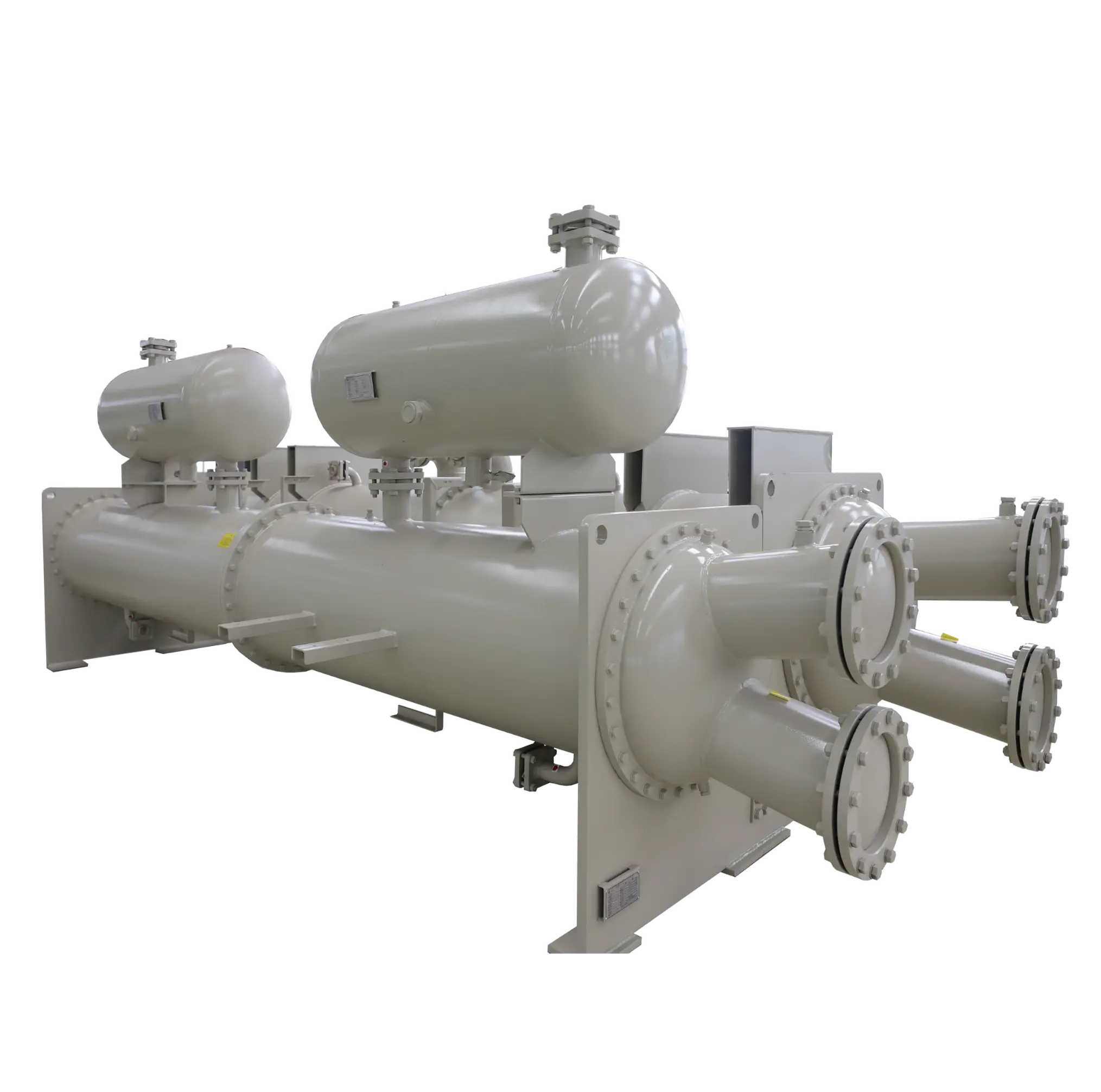
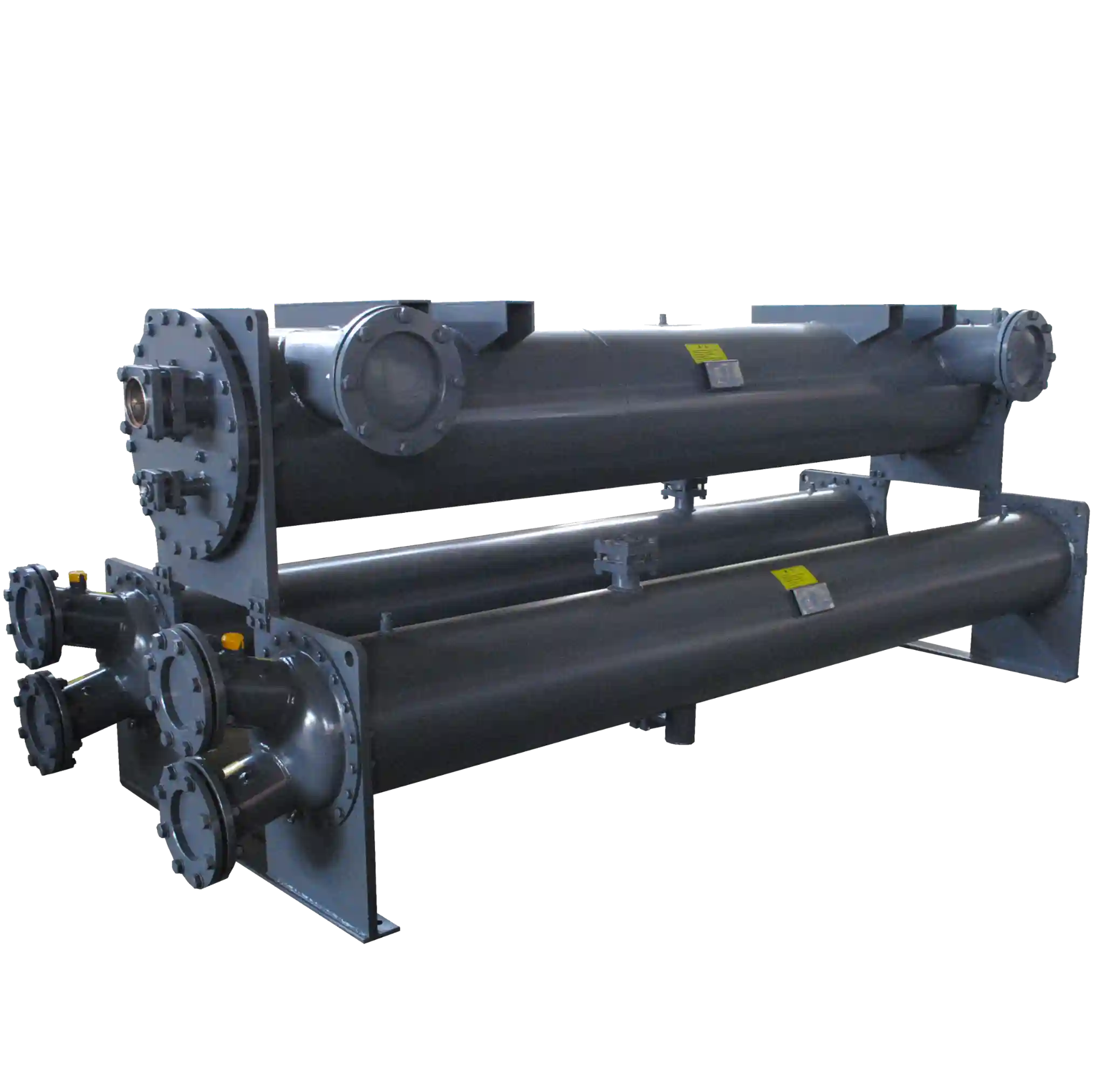
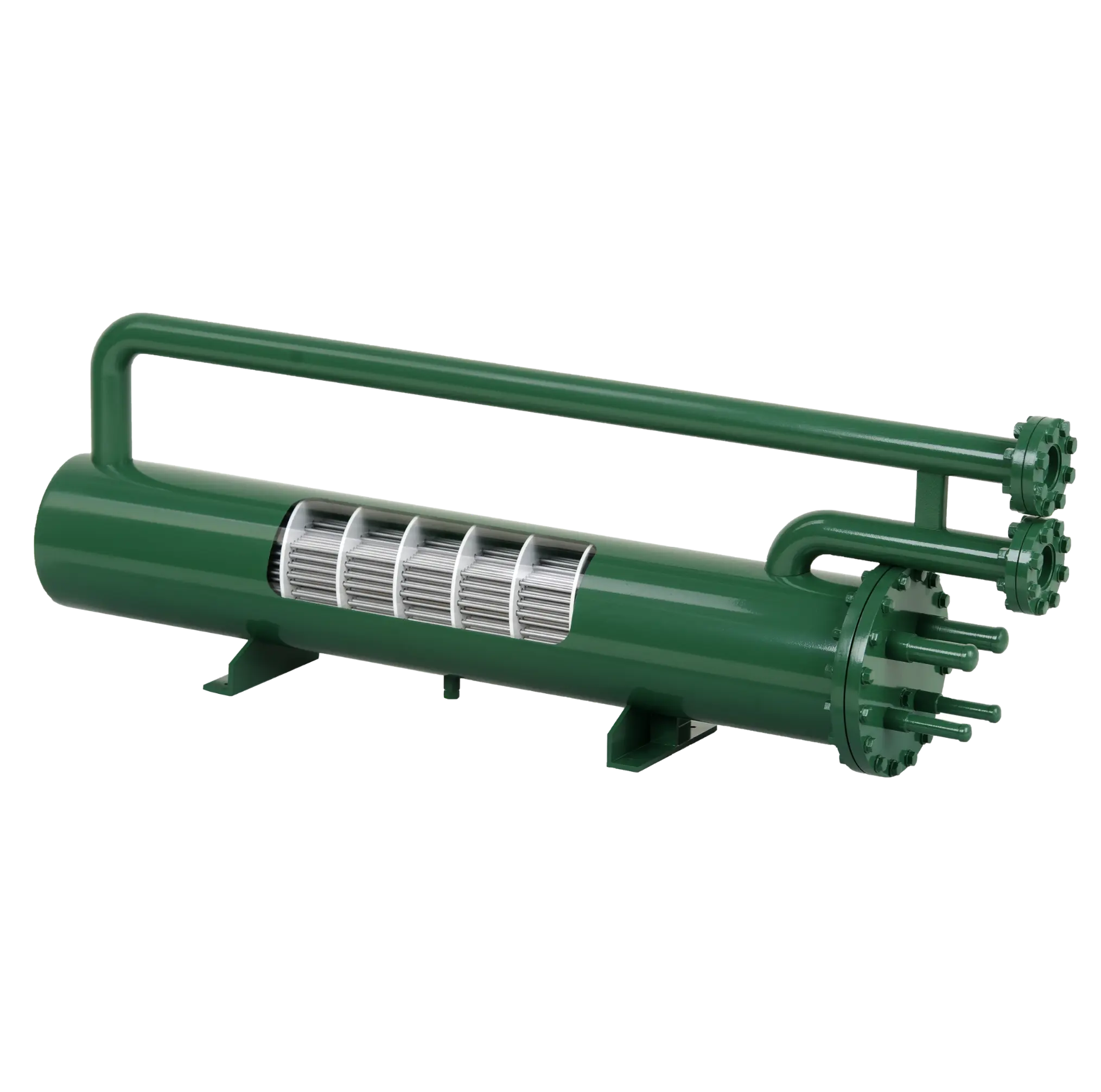
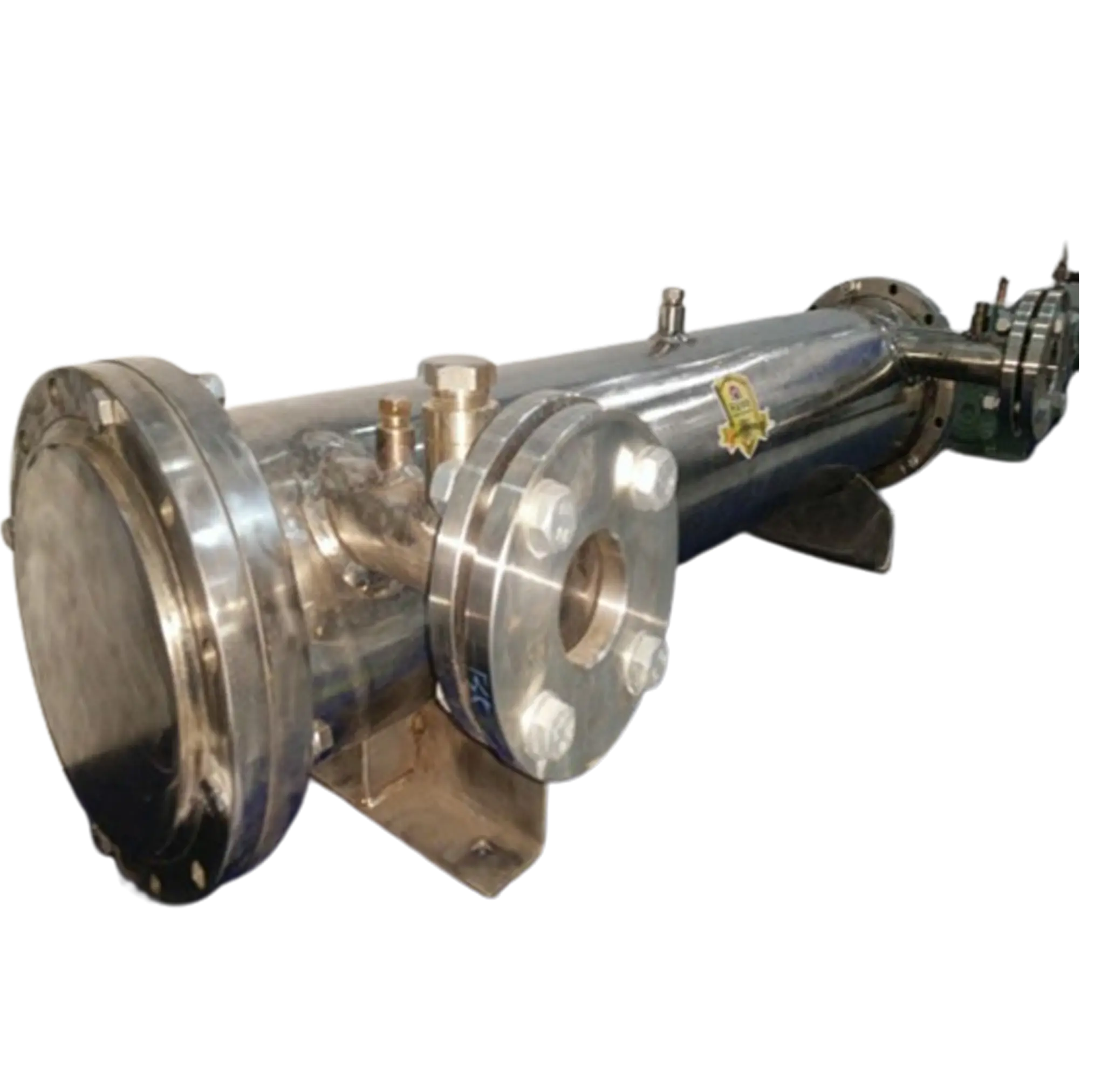
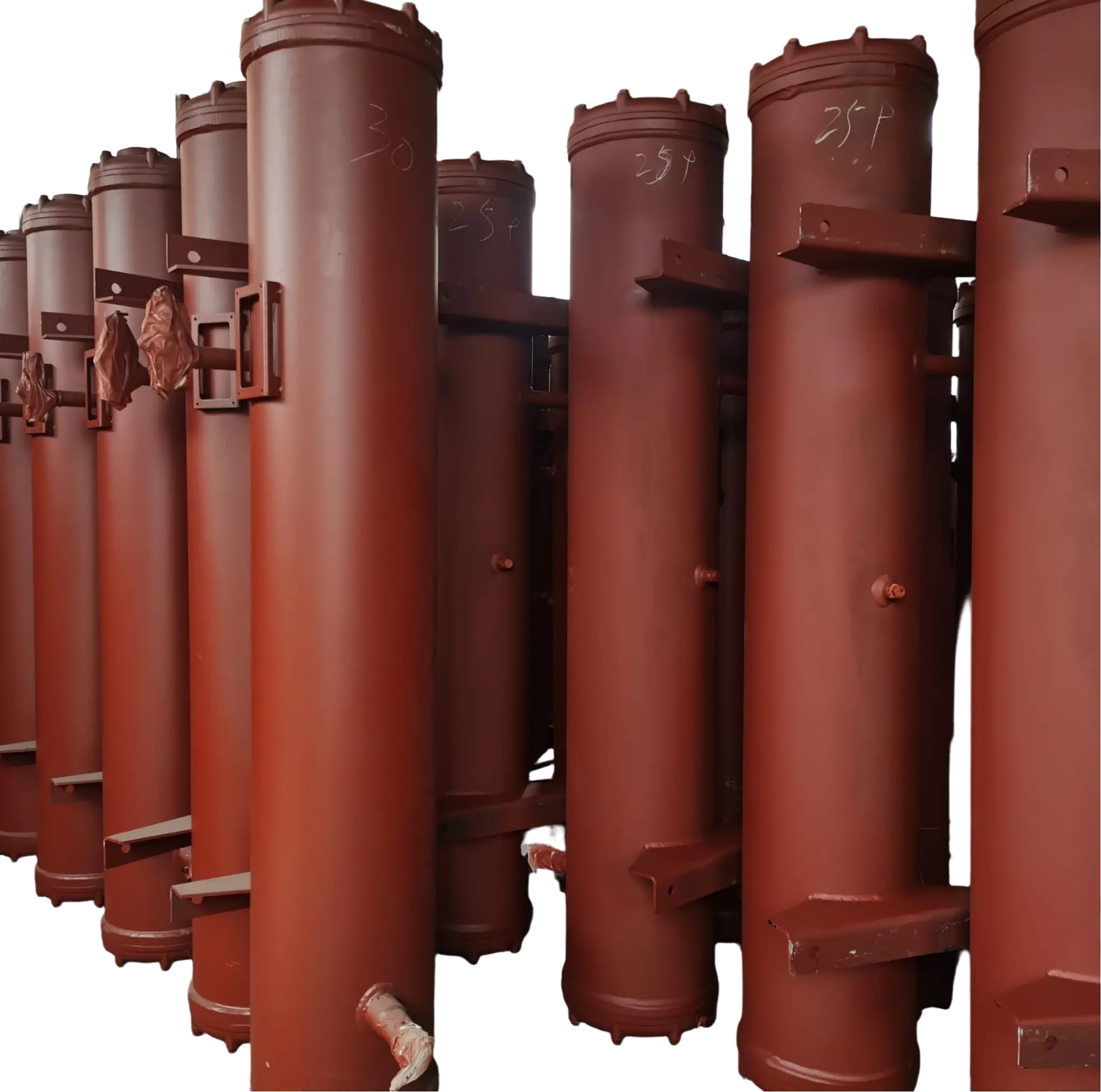
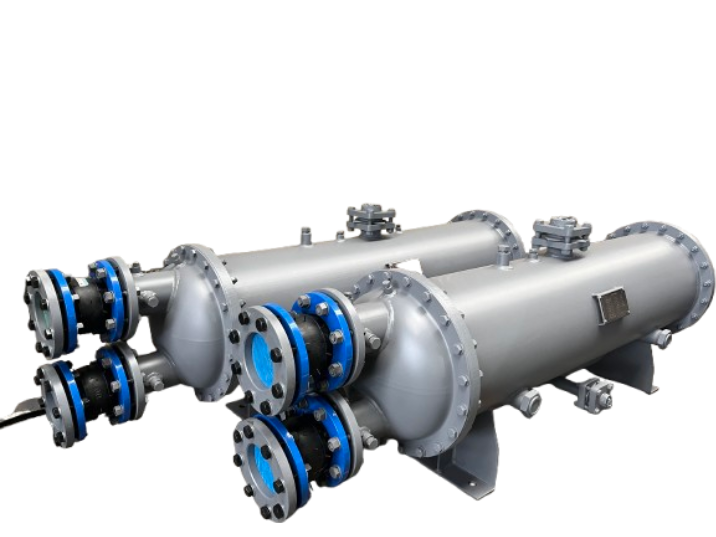
A screw-type series heat exchanger is a type of refrigeration heat exchanger designed to transfer heat between a refrigerant and a secondary fluid, such as chilled water or brine. It is typically used in medium- to large-capacity cooling systems that use screw compressors. In refrigeration engineering, its performance depends on the heat transfer area, the distribution of the refrigerant, the flow of the fluid, the temperature difference, the pressure drop, and the operating conditions. ASHRAE identifies shell-and-tube liquid coolers and condensers as established configurations for refrigeration systems, including applications with rotary screw compressors.
The term can be confusing because ‘screw heat exchanger’ is also used in process engineering to refer to thermal screw conveyors. In the refrigeration industry, however, a screw-type series heat exchanger generally refers to a series of heat exchangers intended to work with screw-type refrigeration systems rather than a conveyor containing rotating screws. This distinction is important when researching or specifying the equipment.
What Is a Screw-Type Series Heat Exchanger?
A screw-type series heat exchanger is a specialised heat exchanger used in refrigeration and air conditioning systems where a screw compressor provides the refrigeration capacity. Depending on the configuration of the system, the heat exchanger may function as either an evaporator or a condenser, although the term is more commonly associated with large-capacity refrigeration equipment and chilled-water systems.
Its basic function is the same as that of any heat exchanger: to transfer thermal energy between two media while keeping them physically separated. In a chilled-water application, for instance, the refrigerant absorbs heat from the water or brine inside the evaporator. In a condenser application, the hot refrigerant rejects heat to the cooling water or another heat rejection medium. ASHRAE defines a liquid cooler as a heat exchanger in which the refrigerant evaporates to cool a circulating fluid, such as water, glycol, or brine.
The Screw-Type Series designation is useful because the exchanger is selected based on the characteristics of screw-compressor refrigeration systems rather than being treated as an isolated component. Capacity, refrigerant, evaporating or condensing temperature, flow rate, pressure drop, connection configuration, and compressor compatibility all influence the final design.
One current industrial product series, for example, lists cooling capacities ranging from 50 kW to 3,000 kW, with configurations intended for use with compressors from brands such as Hanbell, Bitzer, RefComp and Fusheng. However, these figures describe one manufacturer’s product range rather than a universal specification for every Screw-Type Series Heat Exchanger.
How Does a Screw-Type Series Heat Exchanger Work?
It is easier to understand the operating principle by following the refrigeration cycle rather than focusing only on the exchanger itself.
In a typical refrigeration system, the compressor increases the pressure and temperature of the refrigerant vapour. The high-pressure refrigerant then reaches the condenser, where it releases heat to the surrounding cooling medium, changing towards the liquid state in the process. After passing through an expansion device, the pressure and temperature of the refrigerant fall, enabling it to enter the evaporator and absorb heat from the process fluid before returning to the compressor.
ASHRAE describes the condenser as the component that rejects the heat absorbed in the evaporator and the energy added by the compressor. In a water-cooled system, this heat is transferred from the refrigerant to cooling water via heat transfer surfaces.
For the evaporator side, the process is reversed from a heat-flow perspective. The relatively warm process fluid gives up heat to the colder refrigerant, causing it to evaporate. The cooled water, glycol, or brine then leaves the heat exchanger and returns to the cooling circuit.
The exchanger therefore becomes the thermal interface between the refrigeration circuit and the load. Its design directly affects cooling capacity, refrigerant-side and fluid-side pressure drops, temperature approach, and ultimately the efficiency of the entire refrigeration system.

Why Are Screw-Type Heat Exchangers Used in Large Refrigeration Systems?
Screw compressors are widely used in refrigeration systems that require substantial and continuous capacity. According to ASHRAE, rotary screw compressors are commonly paired with flooded shell-and-tube coolers, particularly for cooling water, water/glycol mixtures, and brine.
This makes the heat exchanger an integral component of the system rather than a mere accessory. While a compressor may be capable of delivering a large refrigeration load, if the evaporator is unable to transfer that heat efficiently or creates excessive pressure loss, the overall system will not perform as expected.
Large refrigeration installations also benefit from selecting an exchanger that is compatible with the compressor family and intended refrigerant circuit. Current industrial product offerings illustrate this approach, providing different designs for air conditioning, standard refrigeration, and low-temperature operating conditions rather than treating every application identically.
Another advantage is operating flexibility. Industrial loads rarely remain constant throughout the day, so the exchanger must continue to perform acceptably when flow rates, entering temperatures, and refrigeration capacity change. A properly engineered system considers these operating variations when selecting a heat exchanger, rather than sizing the equipment around only one nominal operating point.
Main Types and Configurations
The phrase “Screw-Type Series Heat Exchanger” does not necessarily identify one single internal construction. The actual configuration depends on whether the equipment is being used as an evaporator, condenser, cooler, or another heat-transfer component.
- Screw-type evaporator
When used as an evaporator, the heat exchanger removes heat from a secondary fluid such as chilled water, glycol, or brine. The refrigerant evaporates while the secondary fluid is cooled, creating the useful refrigeration effect.
Direct-expansion shell-and-tube designs feed refrigerant into tubes where evaporation occurs, while the secondary fluid passes on the other side. Flooded shell-and-tube designs instead maintain liquid refrigerant around the heat-transfer tubes, with evaporation occurring on the refrigerant side. ASHRAE specifically notes that flooded shell-and-tube coolers are commonly used with rotary screw compressors for water, water/glycol, and brine cooling.
- Screw-type condenser
When configured as a condenser, the exchanger removes heat from high-temperature refrigerant vapor and transfers it to cooling water. The refrigerant condenses as its latent and sensible heat are rejected.
Water-cooled shell-and-tube condensers are a well-established industrial configuration. ASHRAE explains that refrigerant can condense outside the tubes while cooling water circulates through the tube bundle, with the final design determined by cooling load, refrigerant, water quality, operating pressure, available space, and maintenance considerations.
- Customized series configurations
Industrial heat-exchanger manufacturers may provide different tube layouts, connection arrangements, supports, and shell configurations within the same product family. This allows the equipment to be adapted to installation constraints and specific refrigeration-unit designs instead of forcing every project into one standard geometry.
This is particularly relevant when replacing an existing exchanger. Matching the required thermal performance is only part of the task; connection positions, shell dimensions, pressure ratings, refrigerant compatibility, and installation space can determine whether the replacement is actually practical.
| Design factor | Why it matters |
| Cooling capacity | Determines the required heat-transfer duty |
| Refrigerant | Affects boiling/condensing behavior and pressure level |
| Evaporating temperature | Strongly influences refrigeration capacity and heat-transfer conditions |
| Condensing temperature | Influences heat rejection and compressor operating conditions |
| Secondary fluid | Water, glycol, and brine have different thermal properties |
| Flow rate | Affects heat-transfer coefficient and pressure drop |
| Heat-transfer area | Determines the available surface for thermal exchange |
| Pressure drop | Influences pumping or compressor-side energy consumption |
| Material | Must withstand fluid chemistry, pressure, and operating temperature |
| Connection size | Must match system piping and installation requirements |
What Are the Main Components?
Although the design varies depending on the manufacturer and the intended use, a refrigeration heat exchanger usually consists of a pressure-containing shell or body, heat-transfer tubes, tube sheets or similar supports, connections for the refrigerant and the fluid, and internal components that control or distribute the flow.
The heat-transfer surface is the most important thermal component because heat must pass through it from one medium to another. The overall heat-transfer coefficient and pressure drop can be influenced by tube diameter, wall thickness, material, surface enhancement, and tube arrangement.
The inlet and outlet connections are equally important from a system integration perspective. Poorly matched connections can cause unnecessary pressure loss and complicate piping or installation, even when the heat exchanger has adequate nominal capacity.
For evaporators, particular attention should be given to refrigerant distribution. ASHRAE explains that uneven refrigerant feeding in direct-expansion coolers can result in some tubes receiving excessive refrigerant while others receive insufficient amounts, which reduces the overall heat-transfer performance and can allow liquid refrigerant to reach the suction line.
This is one reason why simply comparing the external dimensions or nominal cooling capacity of two heat exchangers is not enough. Internal flow distribution can have a significant impact on real-world performance.
Key Performance Parameters
A professional selection process should evaluate several parameters together instead of focusing only on cooling capacity.
- Heat-transfer capacity
The first requirement is usually the required thermal duty. The exchanger must be capable of transferring the required heat under the specified inlet and outlet temperatures, flow rates, and refrigerant conditions.
A larger nominal capacity does not automatically mean better performance. Oversizing can increase cost and physical dimensions, while undersizing can result in insufficient cooling and unfavorable operating conditions.
- Temperature difference
The available temperature difference drives heat transfer. A smaller temperature approach generally requires more heat-transfer area or a more effective exchanger design.
This is why two heat exchangers with the same nominal capacity may have substantially different physical dimensions when designed for different inlet and outlet temperatures.
- Pressure drop
Pressure drop is one of the most overlooked selection parameters. Excessive refrigerant-side pressure loss can alter saturation conditions and negatively affect compressor operation, while excessive secondary-fluid pressure loss increases pumping requirements.
ASHRAE’s treatment of liquid coolers emphasizes that flow velocity, refrigerant distribution, number of passes, and pressure-related effects are integral to heat-exchanger performance.
- Fouling and water quality
Cooling-water quality directly affects long-term performance. Deposits, corrosion products, and biological fouling can add thermal resistance to the heat-transfer surface and reduce capacity.
ASHRAE notes that fouling can become a significant portion of total heat-transfer resistance in water-cooled condensers, particularly when enhanced heat-transfer surfaces are used.
Consequently, heat-exchanger selection should consider not only initial thermal performance but also the actual maintenance environment.
Screw-Type Series Heat Exchanger vs Conventional Shell-and-Tube Heat Exchanger
These terms should not automatically be treated as opposites. In fact, many Screw-Type Series Heat Exchangers used in refrigeration can employ shell-and-tube principles; “screw-type” may describe the refrigeration system or compressor application rather than a rotating screw inside the exchanger.
A conventional shell-and-tube heat exchanger can serve many applications, including refrigeration, process heating and cooling. A Screw-Type Series model is generally selected with the operating requirements of screw-compressor refrigeration equipment in mind.
The practical difference therefore lies more in application matching and system integration than in a simple claim that one heat-exchanger geometry is universally better.
| Comparison point | Screw-Type Series Heat Exchanger | General Shell-and-Tube Heat Exchanger |
| Primary positioning | Refrigeration systems using screw-type compressors | Broad industrial and HVAC applications |
| Typical duty | Large-capacity cooling, chilled water, brine, and refrigeration | Heating, cooling, condensation and evaporation |
| Compressor compatibility | Often specified around screw-compressor families | Not necessarily compressor-specific |
| Capacity range | Commonly used for medium-to-large refrigeration duties | Very broad |
| Design priority | Refrigeration performance and system integration | Application-specific thermal performance |
| Refrigerant distribution | Critical for evaporator performance | Depends on configuration |
| Customization | Often adapted to refrigeration-unit layout | Highly customizable |
| Best selection method | Match refrigeration conditions and compressor system | Match thermal duty and process conditions |
Where Are Screw-Type Series Heat Exchangers Used?
The range of applications is broad because screw compressors are commonly used in industrial and commercial refrigeration.
Typical applications include industrial chillers, central air conditioning systems, process cooling, chilled water systems, brine refrigeration, food processing, cold storage, pre-cooling vegetables and low-temperature refrigeration. Current manufacturer specifications also cover applications such as freeze-drying flowers, showing that the same general equipment can be used for both conventional HVAC and specialised low-temperature processes.
Food and beverage plants may use these systems to maintain process water temperatures or provide refrigeration for production and storage. Industrial plants may use chilled water or brine to control the temperature of manufacturing equipment, chemical processes, or specialised cooling circuits.
In marine or corrosive environments, material selection is particularly important. Heat exchangers exposed to seawater, aggressive brines, or contaminated cooling water may require corrosion-resistant materials and specialised construction rather than a standard carbon steel configuration.
How to Choose a Screw-Type Series Heat Exchanger?
The most reliable selection process begins with a comprehensive operating conditions sheet. At a minimum, the supplier or engineer should be aware of the required cooling capacity, the type of refrigerant, the evaporating and condensing conditions, the type of secondary fluid, the inlet and outlet temperatures, the flow rate, the allowable pressure drop, the design pressure, the operating temperature, and the available installation space.
The compressor should also be specified. While compatibility with compressor brands such as Hanbell, Bitzer, RefComp, or Fusheng may influence connection design, capacity matching, and system integration, compressor brand alone is insufficient for selecting an exchanger. The actual compressor model and operating envelope must be considered alongside the refrigerant and required duty.
Material selection should then be based on the fluid chemistry and operating environment. Standard materials may be sufficient for clean closed-loop chilled water, but for glycol, brine, seawater, or chemically aggressive fluids, corrosion resistance can become a major design requirement.
Finally, consider maintenance. A heat exchanger that performs well initially may become inefficient if the water side cannot be cleaned effectively or if fouling is likely to accumulate. For long-term industrial operation, accessibility and maintainability must be considered alongside the initial purchase price.
Common Selection Mistakes
A common mistake is to select a heat exchanger based solely on its nominal cooling capacity. For example, a 500 kW exchanger does not necessarily provide 500 kW in all operating conditions, as actual capacity depends on the refrigerant, temperatures, flow rates, and heat transfer conditions.
Another mistake is ignoring pressure drop. A design that achieves high heat-transfer performance by creating excessive pressure loss may not be the most efficient overall.
A third mistake is overlooking refrigerant distribution. ASHRAE specifically identifies uneven distribution as a potential cause of poor performance of direct-expansion evaporators and liquid carryover.
Finally, buyers sometimes compare products based only on dimensions and price. For industrial refrigeration, a technically correct comparison should include thermal duty, pressure drop, design pressure, materials, refrigerant compatibility, water-side conditions, fouling allowance, maintenance requirements, and expected operating conditions.
Why Customization Matters?
There is rarely one universal heat-exchanger configuration that is optimal for every screw refrigeration project. The same nominal capacity can require different designs depending on refrigerant, temperature range, secondary fluid, flow rate, and installation geometry.
Customization may involve tube arrangement, shell dimensions, connection orientation, supports, refrigerant-side configuration, and other components. Some current product lines explicitly offer customized component supports and unit connection piping to reduce assembly work during chiller integration.
For OEMs and refrigeration-equipment manufacturers, this flexibility can be particularly valuable. The heat exchanger must fit not only the thermal calculation but also the physical architecture of the complete refrigeration unit.
FAQ: Screw-Type Series Heat Exchanger
- What is a Screw-Type Series Heat Exchanger?
A Screw-Type Series Heat Exchanger is a heat exchanger designed primarily for refrigeration systems using screw compressors. It transfers heat between refrigerant and water, glycol, brine, or another cooling medium.
- What is a Screw-Type Series Heat Exchanger used for?
It is commonly used in industrial chillers, air-conditioning refrigeration, chilled-water systems, brine cooling, and low-temperature refrigeration. Some applications also include food pre-cooling and specialized industrial cooling processes.
- Is a Screw-Type Heat Exchanger the same as a screw conveyor heat exchanger?
No. A screw conveyor heat exchanger uses rotating screws to transport and simultaneously heat or cool bulk materials, while a refrigeration Screw-Type Series Heat Exchanger is normally associated with screw-compressor refrigeration equipment.
- Can a Screw-Type Series Heat Exchanger be used as an evaporator?
Yes, it can be designed as an evaporator to cool water, glycol, or brine. ASHRAE notes that flooded shell-and-tube coolers are commonly used with rotary screw compressors.
- How do I select a Screw-Type Series Heat Exchanger?
Start with cooling capacity, refrigerant, evaporating temperature, secondary-fluid temperature, flow rate, and allowable pressure drop. Then verify material compatibility, design pressure, compressor compatibility, installation dimensions, and maintenance requirements.
- What affects the performance of a Screw-Type Series Heat Exchanger?
Heat-transfer area, temperature difference, fluid velocity, refrigerant distribution, pressure drop, fouling, and material properties all affect performance. Operating conditions must therefore be considered together rather than judging the exchanger by nominal capacity alone.
Conclusion
A screw-type series heat exchanger is a refrigeration-focused heat exchanger designed to work within screw compressor cooling systems. It transfers heat efficiently between the refrigerant and a secondary cooling or heat rejection medium. Depending on the system design, it may function as an evaporator, condenser, or specialised refrigeration heat-transfer component.
Capacity and physical size are not the most important selection criteria. The refrigerant type, compressor model, evaporating and condensing temperatures, secondary fluid type, flow rate, pressure drop, heat transfer area, material compatibility, fouling conditions and installation requirements should all be considered together.
Therefore, for industrial buyers, the best heat exchanger is not necessarily the largest or most expensive model. Rather, it is the model whose thermal and hydraulic performance remains appropriate across the actual operating envelope while integrating reliably with the screw refrigeration system.