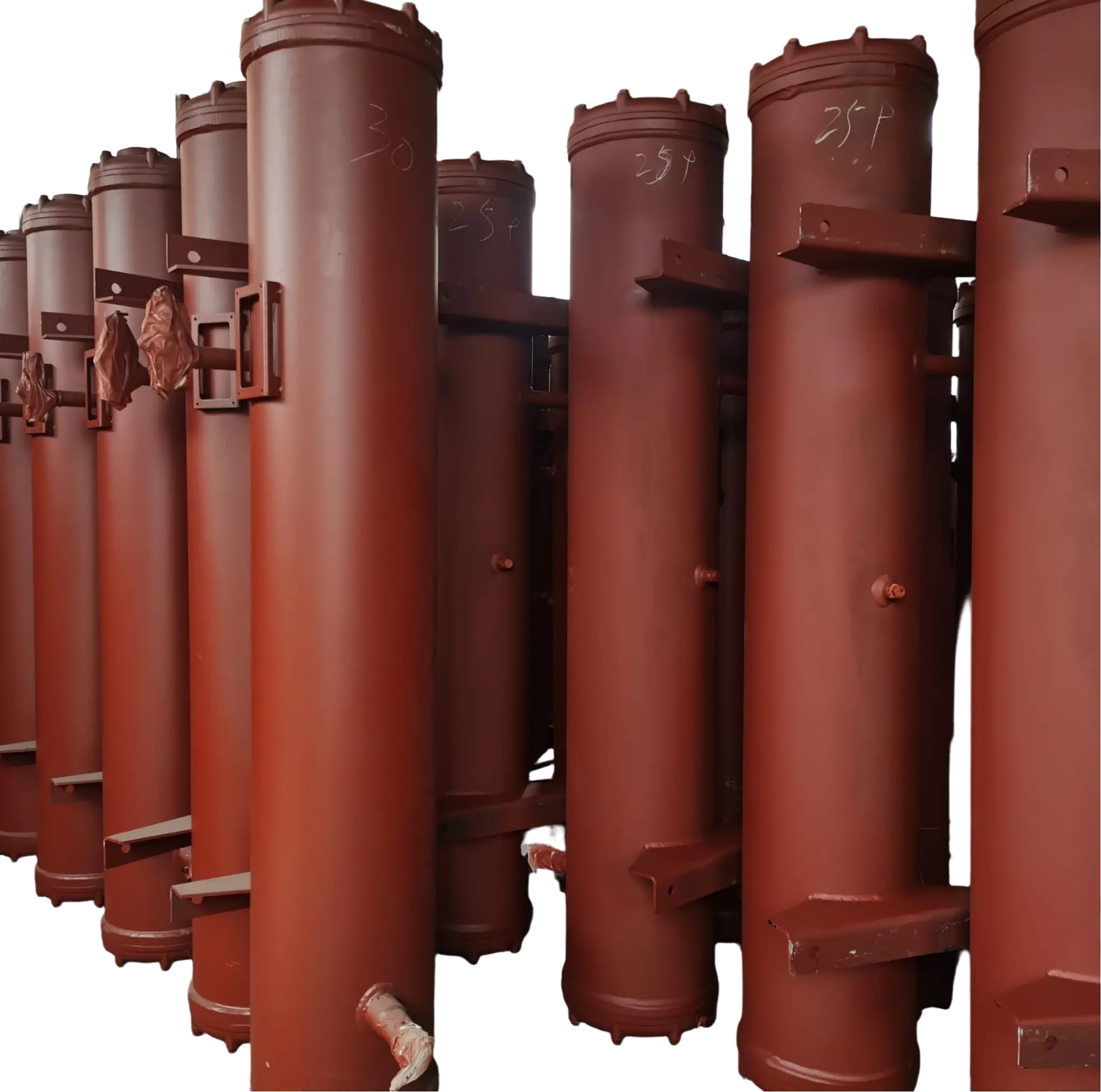
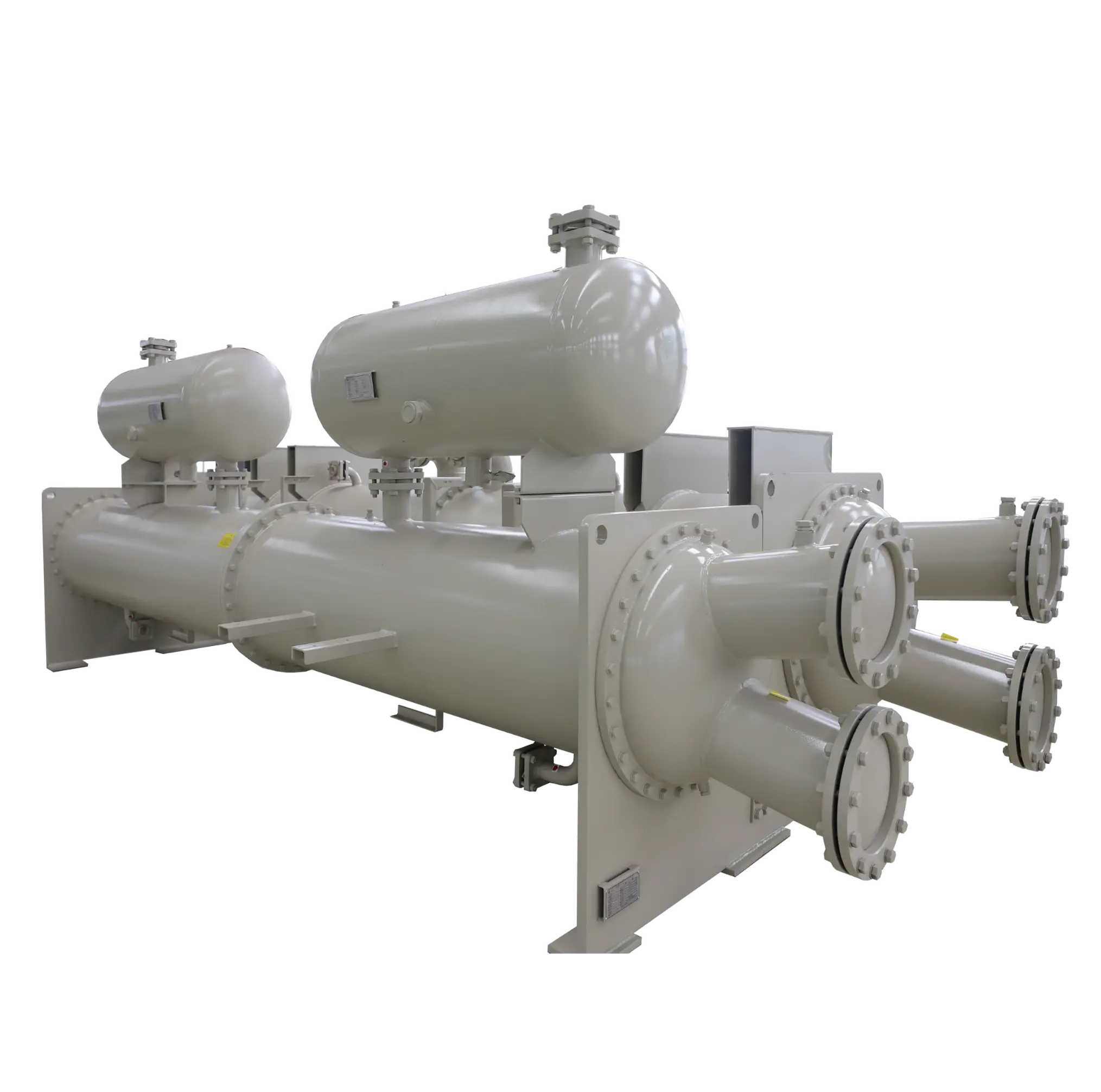
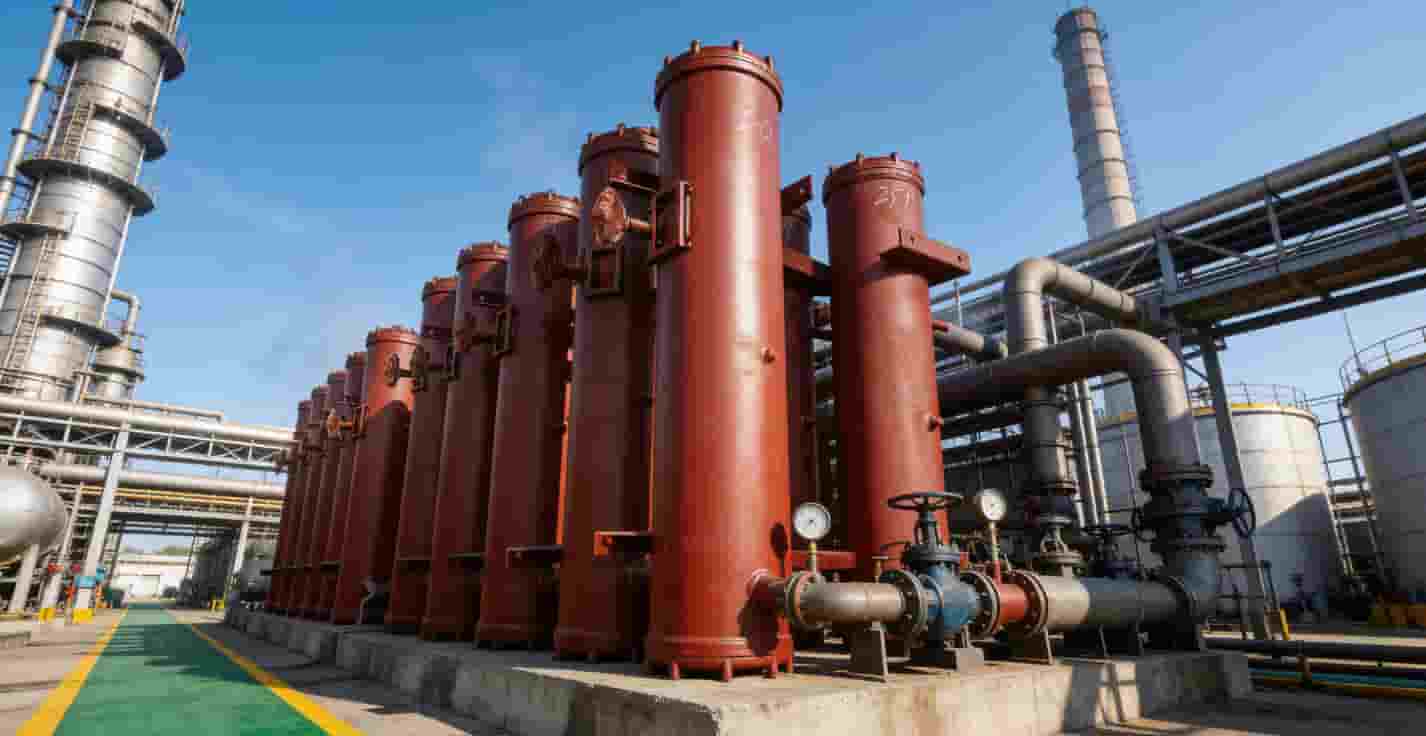
High-pressure shell and tube heat exchanger
The shell and tube heat exchanger is one of the most widely used types of heat transfer equipment in industrial applications. It consists of a series of tubes inside a cylindrical shell. One fluid flows through the tubes while another flows around them inside the shell. Heat is transferred between the two fluids through the tube walls without them mixing.
Thanks to their robust structure, high heat transfer efficiency, and ability to withstand high-pressure and high-temperature conditions, shell-and-tube heat exchangers are commonly used in the power generation, chemical processing, oil and gas, HVAC, and manufacturing industries.
The main components of a shell and tube heat exchanger are the shell, the tube bundle, the tube sheets, the baffles, the channels, and the nozzles. Various designs, such as fixed tube sheet, U-tube, and floating head types, enable the equipment to meet different process requirements.
Shell and Tube Heat Exchanger Applications
- Oil and gas industry
Shell-and-tube heat exchangers are widely used for heating crude oil, cooling gas, and in condensers and refinery process heat recovery.
- Chemical and petrochemical industry
These heat exchangers are used in chemical processing systems for the heating, cooling, evaporation, and condensation of various fluids.
- Power generation
These heat exchangers are commonly used in steam condensers, feedwater heaters and cooling systems in power stations.
- Heating, Ventilation, Air Conditioning (HVAC) and Refrigeration Systems
Shell and tube heat exchangers are used in chilled water systems, air conditioning units and industrial cooling applications.
- Food and beverage industry
They are used for heating, cooling and temperature control processes where reliable, hygienic heat transfer is required.
Shell and Tube Heat Exchanger Maintenance
Proper maintenance is essential for maintaining heat transfer efficiency and extending the service life of equipment.
- Regular inspection
Check for signs of corrosion, leakage, vibration, and abnormal pressure or temperature changes during operation.
- Tube cleaning
Deposits such as scale, dirt and biological fouling can reduce heat transfer performance. Regular mechanical or chemical cleaning helps to restore efficiency.
- Leakage testing
Inspect the tube sheets, tube joints and seals to identify potential leaks and prevent fluid contamination.
- Monitor operating parameters
Track inlet and outlet temperatures, pressure drop and flow rates to detect early signs of performance changes.
- Replace damaged components
Promptly repair or replace worn tubes, gaskets, or seals to avoid further equipment damage.